The arrest of former Prince Andrew, legally named Andrew Mountbatten-Windsor, has sent shockwaves across the United Kingdom. Police confirmed that he was arrested on suspicion of misconduct in public office and remains in custody while investigations continue.
The development marks one of the most serious legal moments involving a senior member of the Royal Family in modern history. As a result, questions are now being raised about the legal process, the potential consequences and the wider impact on the monarchy.
Cost of Living Payment 2026: Who Qualifies for the £500 Support?
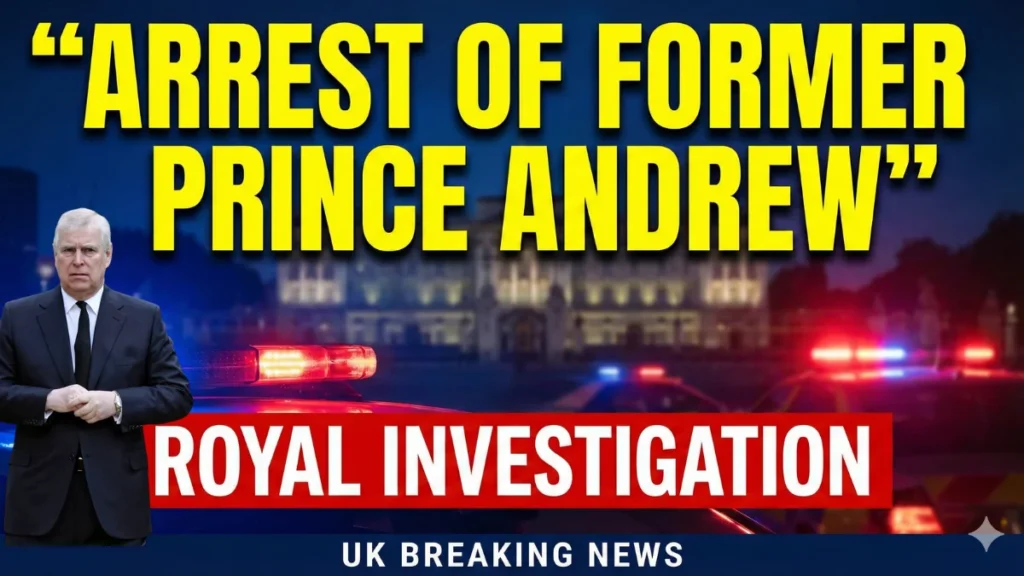
Why Was Arrest of Former Prince Andrew?
Police arrested Andrew Mountbatten-Windsor on suspicion of misconduct in public office. The arrest relates to allegations connected to his former role as the UK Special Representative for International Trade and Investment.
Investigators are examining claims that confidential or sensitive material may have been shared during his time in public office. While earlier public controversy involved links to Jeffrey Epstein, the current arrest specifically concerns alleged misconduct while serving in an official capacity.
Importantly, suspicion does not mean guilt. The investigation is ongoing.
Where and When Did the Arrest Take Place?
Police officers arrived at a property on the Sandringham Estate in Norfolk at approximately 08:00 in the morning. At that time, Andrew Mountbatten-Windsor was arrested and taken into custody.
Following the arrest, police began searches at multiple locations, including:
- A property on the Sandringham Estate
- Royal Lodge in Windsor, where he had previously lived
Officers were seen conducting searches throughout the day.
DWP Benefit Increase 2026: Full List of April Payment and Pension Changes
What Is “Misconduct in Public Office”?
Misconduct in public office is a serious criminal offence. It typically applies when a public official:
- Wilfully neglects their duty
- Abuses their position
- Acts improperly in an official role
To secure a charge, prosecutors must demonstrate that the conduct was serious enough to warrant criminal action.
Because this offence concerns actions while holding public office, the investigation focuses on Andrew’s activities during his time as a trade envoy.
How Long Can Police Hold Someone?
Under UK law, police can initially detain a suspect for up to 24 hours. However, in complex cases, officers may request extensions.
Typically, in white-collar or administrative investigations:
- Initial detention lasts several hours
- The suspect may later be released on bail
- Further questioning may take place at a later date
Therefore, being arrested does not automatically mean charges will follow.
What Happens Next?
After initial questioning and searches, police will review evidence. Eventually, the Crown Prosecution Service must decide whether there is enough evidence to bring charges.
That decision could take weeks or even months.
If charges were brought, the case would proceed through the courts like any other criminal case. Legally, no individual is above the law.
State Pension Rise 2026 Confirmed: New Payment Rates Explained
Reaction From the King
King Charles released a formal statement following the arrest. He expressed deep concern about the news and stated clearly that the law must take its course.
He emphasised that the matter should be handled through a full, fair and proper legal process. Furthermore, he indicated that the Royal Family would cooperate fully with authorities.
Notably, the King was not informed in advance that the arrest would take place.
Wider Police Investigations
Several UK police forces are reviewing matters linked to related allegations and documents. However, authorities clarified that other investigations are separate from the specific arrest on suspicion of misconduct in public office.
Some forces are reviewing records, flight logs and communications linked to historic claims. Nevertheless, none of those actions directly triggered the arrest.
Impact on the Royal Family
This development represents a significant moment for the monarchy. Although Andrew had already stepped back from official duties in previous years, the arrest intensifies scrutiny.
Senior royals continued with scheduled public engagements despite the news. However, commentators suggest the event places additional pressure on the institution.
Because Andrew is the King’s brother and the son of the late Queen, the situation carries both legal and symbolic weight.
What We Do Not Yet Know
While police confirmed the arrest, several details remain unclear:
- Whether formal charges will be brought
- The specific documents under review
- The timeline for further investigation
- Whether additional interviews will take place
Until prosecutors reach a decision, the case remains at the investigation stage.
Legal Principle: Presumption of Innocence
It is important to remember that arrest is not the same as conviction. Under UK law, every individual is presumed innocent until proven guilty in a court of law.
Therefore, the investigation must proceed through established legal channels.
FAQs
He was arrested on suspicion of misconduct in public office related to his former official role.
At a property on the Sandringham Estate in Norfolk.
No. He has been arrested, but no charges have been announced.
No. Initial detention has strict legal time limits.
Yes. The King stated that the law must take its course and confirmed full cooperation with authorities.
Final Thoughts
The arrest of former Prince Andrew marks a significant development in UK public life. Although the investigation is still at an early stage, it raises serious legal and constitutional questions.
At this point, the process must unfold through formal legal channels. As authorities continue their investigation, clarity will only emerge once prosecutors decide whether further action is warranted.
For now, the situation remains under active review, and the presumption of innocence remains central to the case.

Diana Luci is a Senior Financial Analyst and Policy Researcher based in the US. She specializes in breaking down complex government updates, IRS changes, and economic trends into clear, actionable insights for everyday Americans.