Millions of Americans are packing up their Independence Day barbecues and heading back to work this morning, but dangerous weather conditions are heavily disrupting the post-holiday commute. A severe flood watch has been issued across several major metropolitan areas today, following a weekend of relentless, slow-moving thunderstorms. From the Deep South to the Midwest, torrential rain is overwhelming local infrastructure and prompting rapid emergency warnings.
If you are living in the affected regions, here is exactly what is happening right now and which communities are at the highest risk for sudden rising waters.
Read Also-Brooklyn Bridge Fire: What Really Happened During the NYC July 4 Fireworks
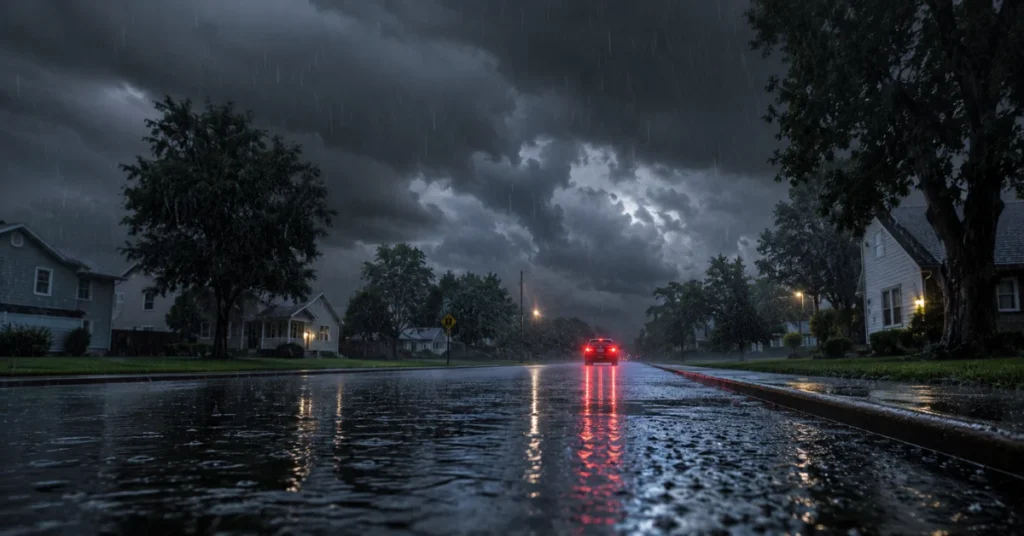
Where is a Flood Watch Currently in Effect?
The National Weather Service has been working overtime this July weekend to track multiple intense storm systems scattered across the country. The biggest immediate threats are concentrated in a few specific zones where the ground is already completely saturated from continuous downpours.
- The Greater Chicago Area: Forecasters have placed numerous counties in Illinois—including Cook, DuPage, Kane, and Will under strict watches. Northwestern Indiana, specifically Lake County, is also in the danger zone. Localized flooding has already forced road closures in suburban neighborhoods like Bartlett and Huntley, and the Federal Aviation Administration reported significant delays at O’Hare airport.
- Metro Atlanta: Georgia residents faced extreme disruptions when weekend thunderstorms dumped up to three inches of rain in a matter of hours, leading to a temporary ground stop at the city’s main airport. The threat persists across northern and central counties, with small creeks and urban underpasses becoming particularly hazardous.
- Southern Minnesota: A chaotic “ring of fire” weather pattern is brutally impacting the northern Midwest. Intense, stationary bands of rain previously forced the closure of sections of Interstate 90, and emergency management officials are warning that rivers in the Driftless region could easily overtop their banks as more moisture rolls in today.
Read Also-Did Trump Give a Speech Today? 2026 Semiquincentennial Address Details
The Threat of the July 2026 Weather Pattern
Meteorologists point to a combination of an oppressive summer heat dome and an unpredictable jet stream for this sudden burst of extreme weather. When temperatures soar toward the triple digits, the atmosphere holds significantly more moisture. This results in massive rainfall rates sometimes up to two inches per hour when these supercell storms finally break.
Regions along the East Coast, particularly around Philadelphia and New Jersey, are also bracing for potential localized flash flooding tonight and into Monday as the intense holiday heatwave clashes with incoming atmospheric fronts.
If you reside in a vulnerable area, keep your mobile device fully charged and ensure your emergency weather alerts are permanently turned on. Never attempt to drive through a flooded intersection, as it only takes a few inches of moving water to completely lift and wash away a standard passenger vehicle.
Read Also- Beyonce Drops Surprise Track “Morning Dew” for B’Day 20th Anniversary

Diana Luci is a U.S.-based Latest and financial news writer covering Social Security, IRS tax updates, SNAP benefits, Medicare, and government assistance programs. She focuses on simplifying complex financial and policy topics into clear, easy-to-understand information for everyday readers.