The tablet market is currently undergoing its most significant transformation in years, and the highly anticipated Apple iPad 2026 lineup is at the absolute center of the conversation. For millions of American consumers, the reliable glass slab has replaced the traditional clunky laptop for everything from casual Netflix binge-watching to intense professional video editing.
However, with rumors of massive price hikes attached to the upcoming generation of Pro models, many existing users are seriously questioning if the technological leap justifies emptying their wallets. If you are currently holding onto a perfectly fine three-year-old device, you need to understand exactly what is changing under the hood before you blindly preorder the latest model.
UConn Men’s Basketball 2026: The Unstoppable March Madness Dynasty
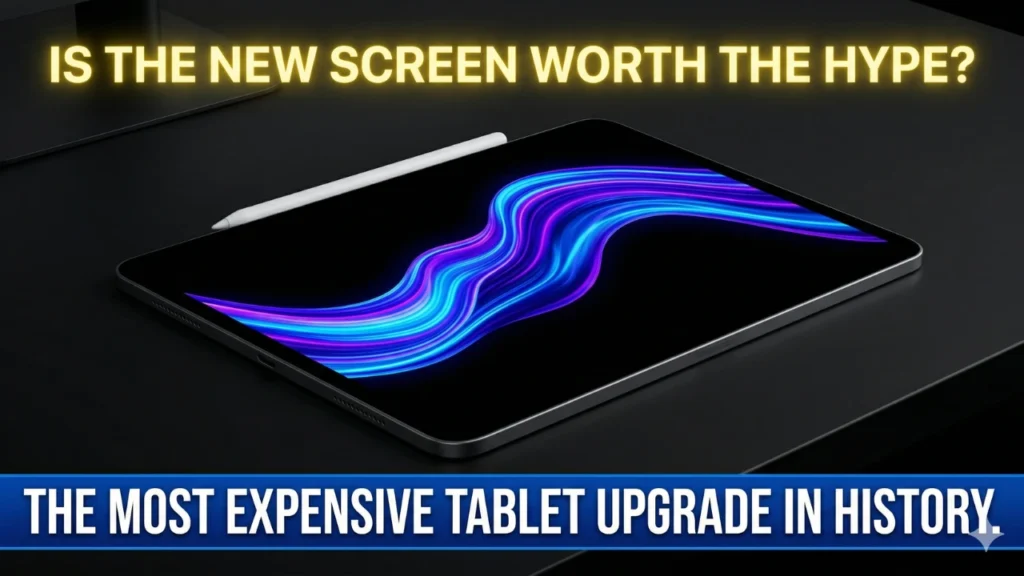
The OLED Display Revolution
The most aggressive marketing point for the new premium tier of tablets is the complete transition to Organic Light-Emitting Diode (OLED) technology. Historically, Apple has reserved these stunning displays solely for their flagship iPhones and high-end smartwatches.
If you use your tablet primarily for consuming HDR movies, editing high-resolution photography, or digital illustration, the OLED difference is immediately staggering. Unlike traditional LCD screens that rely on a massive backlight, every single pixel on an OLED panel physically illuminates itself.
When a scene requires pure black like deep space in a sci-fi movie those specific pixels completely turn off. This creates an infinite contrast ratio, incredibly vibrant color accuracy, and completely eliminates the annoying “blooming” effect you see around white text on a dark background.
NASA ISS Emergency: Why Astronauts Prepared for Immediate Evacuation
The M-Series Processing Power
While the screen gets all the visual attention, the internal silicon is where the real future-proofing happens. The Apple iPad 2026 Pro models are heavily rumored to skip minor iterations and jump directly to the next generation of Apple’s proprietary M-series architecture.
For the average user scrolling through social media or checking emails, this massive processing power is mathematically invisible; your current device is already fast enough. However, for creative professionals who export massive 4K video timelines in Final Cut Pro or render complex 3D architectural models in real-time, the new chip fundamentally changes their mobile workflow.
It finally allows the physical hardware of the tablet to catch up to the heavy, desktop-class software Apple has been slowly pushing to the App Store.
Tiger Woods Crash 2026: Golf Legend Arrested After Dramatic Rollover
The Thinner Design and the Accessory Trap
Alongside the internal upgrades, leaked schematics suggest the new Pro models will be noticeably thinner, utilizing the space saved by the new display technology. While a sleeker profile is aesthetically pleasing, it introduces a significant, hidden cost for consumers: accessory compatibility.
Because the physical dimensions and the internal magnetic arrays are changing, there is a very high probability that your expensive, current-generation Magic Keyboard and Apple Pencil will be entirely incompatible with the new 2026 hardware.
This means the true cost of upgrading is not just the inflated price tag of the tablet itself, but the forced repurchasing of hundreds of dollars worth of essential productivity accessories.
McDonalds Adult Happy Meals 2026: The Nostalgia Trend Taking Over
Should You Actually Upgrade?
If you are currently using an entry-level base model or an aging iPad Air that is struggling to hold a battery charge through a long flight, the 2026 lineup offers a monumental leap in daily performance. However, if you already own an M1 or M2 iPad Pro, your current device is still incredibly overpowered for 95% of daily tasks. Unless your specific professional workflow actively demands the flawless color accuracy of an OLED screen, holding onto your current tablet is the smartest financial decision you can make this year.

Diana Luci is a Senior Financial Analyst and Policy Researcher based in the US. She specializes in breaking down complex government updates, IRS changes, and economic trends into clear, actionable insights for everyday Americans.