California Daylight Saving Time is something millions of residents adjust to every year. While it may seem like just moving clocks forward or backward, the time change affects sleep, work schedules, travel and even energy usage.
In 2026, Californians will once again switch between Standard Time and Daylight Saving Time. Knowing the exact dates helps avoid confusion and missed appointments.
Here is everything you need to know about California Daylight Saving Time in 2026.
When Does Daylight Saving Time Start in California 2026?
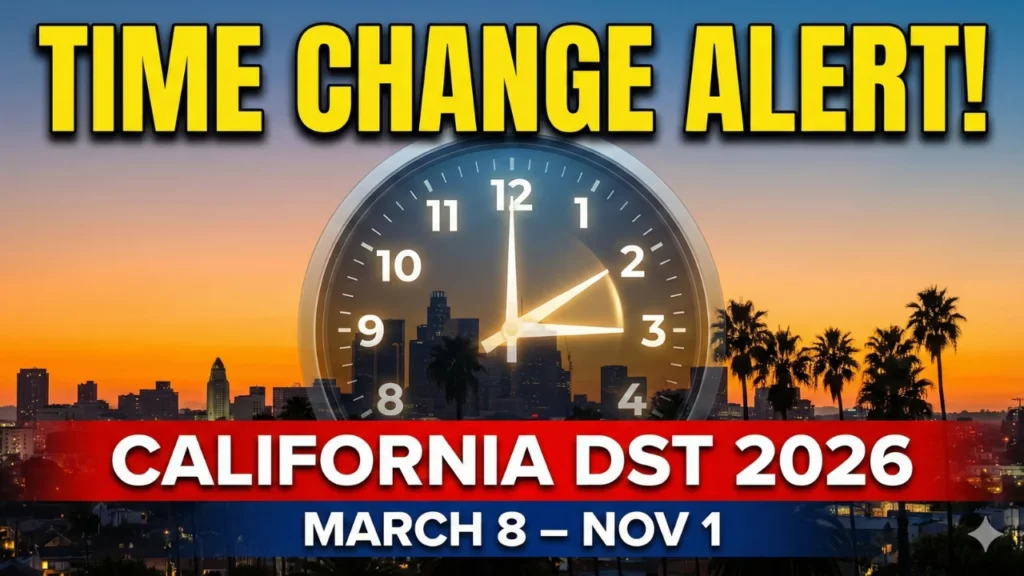
Daylight Saving Time in California will begin on:
Sunday, March 8, 2026
At 2:00 AM, clocks will move forward by one hour. This change is often called “spring forward.”
What this means:
- You lose one hour of sleep
- Sunrise and sunset happen later
- Evenings stay brighter for longer
Most digital devices update automatically, but manual clocks need adjustment.
When Does Daylight Saving Time End in 2026?
Daylight Saving Time will end on:
Sunday, November 1, 2026
At 2:00 AM, clocks will move back by one hour. This change is known as “fall back.”
What this means:
- You gain one extra hour of sleep
- Sunsets happen earlier
- Mornings become brighter
This shift returns California to Pacific Standard Time.
Why Does California Follow Daylight Saving Time?
Daylight Saving Time was introduced to make better use of daylight during warmer months.
Supporters say it helps:
- Extend evening daylight
- Reduce energy consumption
- Support outdoor activities
- Boost retail and tourism sectors
However, the practice remains debated nationwide.
Does California Plan to End Daylight Saving Time?
There have been discussions in recent years about making Daylight Saving Time permanent or eliminating time changes completely.
Some proposals suggest:
- Keeping clocks the same year-round
- Aligning with neighboring states
- Ending seasonal clock adjustments
As of now, California continues to follow the national schedule.
How the Time Change Affects Daily Life
Even though it is just one hour, the time change can impact:
- Sleep patterns
- Productivity
- School schedules
- Flight timings
- Business operations
Experts often recommend gradually adjusting sleep schedules a few days before the change.
Health and Sleep Considerations
The “spring forward” change is often harder on people because it reduces sleep.
Common short-term effects include:
- Feeling tired
- Difficulty concentrating
- Mild mood changes
Creating a consistent bedtime routine can reduce disruption.
Travel and Technology Tips
When the time changes, travelers should:
- Confirm flight times
- Double-check event schedules
- Adjust manual watches
Most smartphones, laptops and smart devices update automatically. However, older clocks require manual resetting.
How California Time Relates to Other States
California follows Pacific Time. When Daylight Saving Time begins, the state moves from Pacific Standard Time (PST) to Pacific Daylight Time (PDT).
The time difference with other states may shift during seasonal changes, especially with regions that do not observe Daylight Saving Time.
Quick Summary of 2026 Dates
Start of Daylight Saving Time: March 8, 2026
End of Daylight Saving Time: November 1, 2026
Clock change time: 2:00 AM
Remember: Spring forward in March, fall back in November.
FAQs
It starts on March 8, 2026.
It ends on November 1, 2026
No, some states and territories do not observe it.
Most modern smartphones update automatically.
There have been discussions, but no permanent change has been implemented.
Final Thoughts
California Daylight Saving Time in 2026 will follow the familiar pattern of spring forward in March and fall back in November. While the one-hour shift may seem small, it can influence sleep, schedules and daily routines.
Marking the dates in advance and preparing for the adjustment can make the transition smoother. Staying informed ensures you never miss an important appointment when the clocks change.
Diana Luci is a Senior Financial Analyst and Policy Researcher based in the US. She specializes in breaking down complex government updates, IRS changes, and economic trends into clear, actionable insights for everyday Americans.