Grocery saving hacks 2026 are currently the most important financial tools for American families as food inflation continues to stretch monthly household budgets to their absolute breaking point. Walking into a massive supermarket without a strict plan is a guaranteed way to overspend. Retailers spend millions of dollars studying consumer psychology to subtly trick you into placing expensive, unnecessary items directly into your shopping cart.
If you want to drastically lower your weekly food bill and keep hundreds of dollars in your bank account this year, you must learn how to navigate these massive stores strategically. Here is your practical, fact-based guide to decoding supermarket secrets and beating the retailers at their own game.
Prevent Car Theft 2026: Stop Keyless Entry Hacks
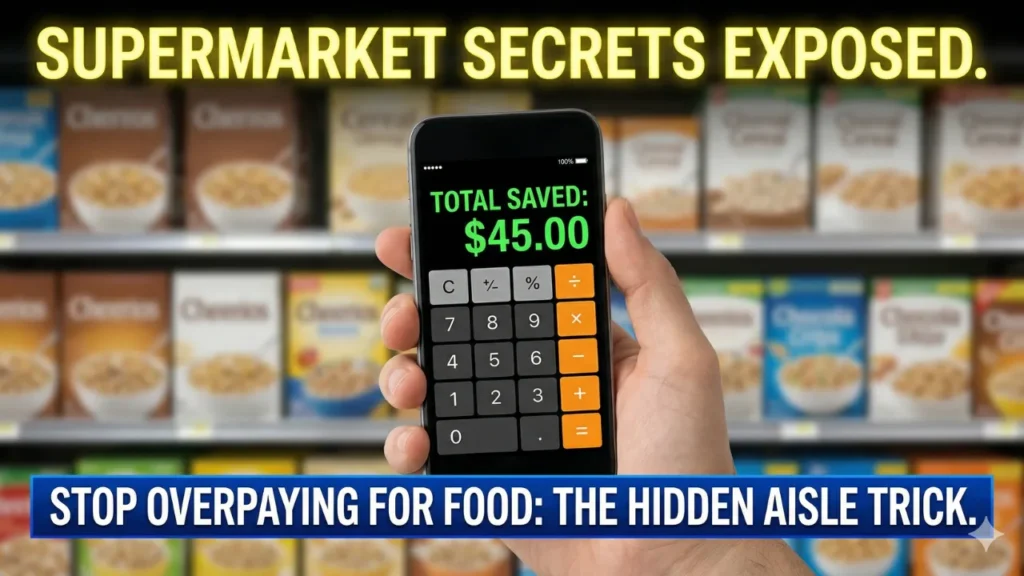
The Best Grocery Saving Hacks 2026
The most effective strategy requires you to change where you physically look while walking down the aisle. Supermarkets intentionally place the most expensive, high-profit name brands right at average adult eye level. To utilize the best grocery saving hacks 2026, you must actively look at the very top and very bottom shelves. This is exactly where stores hide the generic store brands and bulk alternatives, which are often manufactured in the exact same factories as the premium labels but cost 30% less.
Lower Electric Bill 2026: Slash Your Summer Costs
Furthermore, you must completely ignore the large, brightly colored price tag printed on the shelf. Instead, look closely at the tiny number printed in the bottom corner of the label: the “Unit Price.” Retailers frequently shrink the physical size of the packaging while keeping the price exactly the same (known as shrinkflation). By strictly comparing the unit price (the exact cost per ounce or per pound), you can accurately determine which box actually offers the best mathematical value.
The Perimeter Shopping Strategy
Another massive financial trap is the center of the store. The middle aisles are meticulously packed with highly processed, brightly packaged impulse buys with massive profit margins.
Public WiFi Dangers 2026: Protect Your Bank Account
The smartest shoppers utilize the “Perimeter Rule.” By sticking strictly to the outer edges of the physical building, you will naturally find the essential whole foods: fresh produce, dairy, bakery items, and fresh meats. Avoiding the center aisles entirely prevents you from accidentally buying expensive junk food you never actually planned to purchase.
Frequently Asked Questions (FAQs)
Do digital store coupons actually save money?
Yes. Major chains have heavily shifted away from paper circulars. Downloading your local supermarket’s official application allows you to digitally “clip” manufacturer coupons that automatically apply to your total balance at the checkout register.
Is buying in bulk always the cheapest option?
Not always. While massive warehouse club quantities often lower the unit price, you must factor in rapid food waste. Buying a massive bag of fresh spinach is a terrible financial decision if half of it rots in your refrigerator before you can eat it.
Does shopping on an empty stomach really matter?
Absolutely. Studies consistently show that shopping while hungry dramatically increases impulsive purchases, specifically for high-calorie, expensive snack foods that completely ruin your carefully planned weekly budget.
When is the best time to find massive meat markdowns?
Meat department managers typically inspect their inventory and apply bright yellow “Manager’s Special” discount stickers to expiring cuts of meat either very early in the morning or late on Sunday evenings.
Are utilizing these grocery saving hacks 2026 really worth the time?
Yes. Shifting from name brands to generic labels and religiously checking the mathematical unit price can easily reduce a standard family’s annual grocery bill by over $1,500 without sacrificing food quality.
Sell Old Electronics 2026: Get Top Dollar Today

Diana Luci is a Senior Financial Analyst and Policy Researcher based in the US. She specializes in breaking down complex government updates, IRS changes, and economic trends into clear, actionable insights for everyday Americans.