Technology is moving fast, and humanoid robots are becoming more advanced every year. These robots no longer belong only in science fiction movies. Today, engineers design them to work in real-world environments, interact with humans safely, and even assist in daily tasks.
Recent developments show that humanoid robots are becoming smaller, lighter, and more practical. Companies and research teams are focusing on making them safer and easier to use in homes, hospitals, factories, and offices.
As innovation continues, humanoid robots are slowly moving from laboratories into real-life situations.
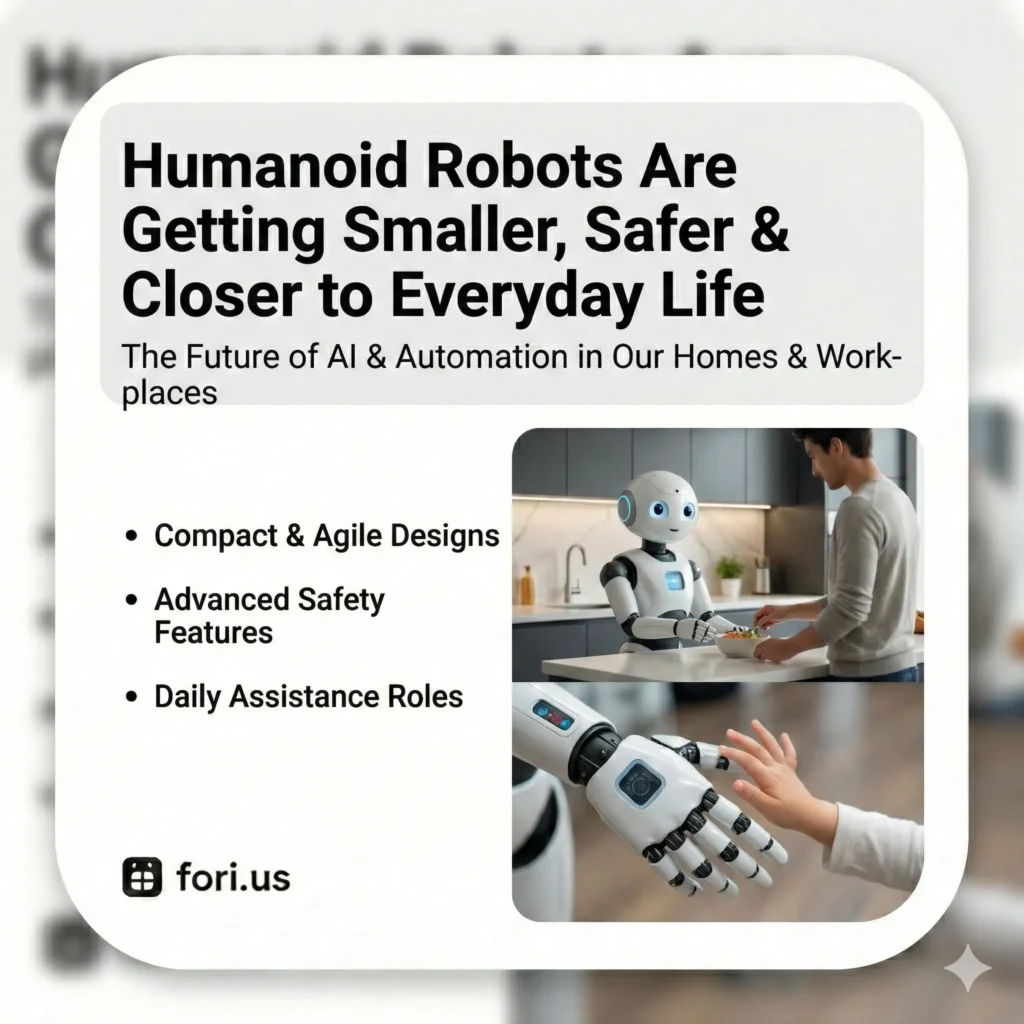
What Are Humanoid Robots?
Humanoid robots are machines designed to look and move like humans. They usually have:
- Two arms
- Two legs
- A head-like structure
- Cameras or sensors for vision
- Artificial intelligence systems
Unlike industrial robots that stay in one place, humanoid robots can walk, turn, lift objects, and respond to their surroundings.
These robots aim to operate in human environments without needing major changes to buildings or tools.
Why Are Humanoid Robots Getting Smaller?
Earlier versions of humanoid robots were large and heavy. They required powerful motors and complex systems to move.
Now, engineers are improving:
- Battery efficiency
- Lightweight materials
- Compact motors
- Advanced AI software
Smaller robots offer several advantages. They are easier to transport, safer to operate near people, and more energy efficient. Compact designs also allow better balance and smoother movement.
As technology improves, manufacturers focus on making robots practical instead of just impressive.
Safety Improvements in Modern Humanoid Robots
Safety is one of the biggest concerns when machines operate around humans. Developers now design humanoid robots with multiple protective systems.
Modern safety features include:
- Soft outer materials
- Force sensors to detect human contact
- Automatic shut-off systems
- Collision avoidance technology
- Real-time environment monitoring
These improvements reduce the risk of injury. Robots can now sense obstacles and slow down before making contact.
Advanced software also helps robots understand human movement patterns. This allows safer interaction in shared spaces.
Where Humanoid Robots Are Being Used
Humanoid robots are slowly entering different industries.
Healthcare
In hospitals and care centers, robots can:
- Deliver medicine
- Assist nurses
- Help patients with mobility
They reduce workload for medical staff while supporting routine tasks.
Manufacturing
Factories use humanoid robots for:
- Repetitive assembly tasks
- Lifting objects
- Quality inspection
Their human-like shape allows them to work in spaces designed for people.
Retail and Customer Service
Some companies test robots in:
- Greeting customers
- Providing information
- Managing inventory
They act as interactive assistants in public spaces.
Artificial Intelligence Makes Robots Smarter
Artificial intelligence plays a key role in humanoid robots. AI allows them to:
- Recognize faces
- Understand speech
- Make decisions
- Learn from experience
Machine learning systems improve performance over time. Instead of following fixed commands, robots can adapt to new environments.
Better AI also helps with balance and walking. Advanced algorithms allow smoother and more natural movement.
Challenges Still Facing Humanoid Robots
Despite progress, challenges remain.
Common issues include:
- High production cost
- Limited battery life
- Complex maintenance
- Ethical concerns
Developers continue working to reduce costs and improve battery performance. As production scales up, prices may decrease.
Public acceptance is another factor. People need to feel comfortable around humanoid machines before they become common.
Why Smaller Robots Matter for the Future
Smaller humanoid robots are easier to integrate into everyday life. Large robots often appear intimidating. Compact designs feel more friendly and less threatening.
Smaller robots also:
- Use less energy
- Require less storage space
- Operate safely in homes
As technology improves, home-use humanoid robots may assist with cleaning, organizing, and monitoring safety.
The Road Ahead for Humanoid Robots
The future of humanoid robots looks promising. Research teams focus on improving mobility, intelligence, and safety.
Possible future developments include:
- Longer battery life
- Better emotional recognition
- Faster learning systems
- More affordable pricing
As robotics and artificial intelligence continue to advance together, humanoid robots may become a normal part of daily life.
FAQs
They are robots designed to look and move like humans.
Smaller designs improve safety, energy efficiency, and practicality.
Modern models include sensors and safety systems to reduce risks.
They are used in healthcare, manufacturing, retail, and research.
With improved safety and lower costs, they may become more common in the future.
Final Thoughts
Humanoid robots are evolving quickly. They are becoming smaller, smarter, and safer for human environments. While challenges still exist, innovation continues at a steady pace.
As technology improves, humanoid robots may shift from experimental machines to everyday helpers. Their development shows how robotics is shaping the future of work and daily life.

Diana Luci is a Senior Financial Analyst and Policy Researcher based in the US. She specializes in breaking down complex government updates, IRS changes, and economic trends into clear, actionable insights for everyday Americans.