The Social Security Trust Fund Crisis refers to projections showing that the nation’s main retirement program may not be able to pay full scheduled benefits in the early 2030s unless Congress makes changes. According to the latest trustees estimates, reserve funds could be depleted within the next decade.
This issue affects more than 67 million Americans who currently receive retirement, disability, or survivor benefits. It also directly impacts today’s workers who fund the system through payroll taxes and expect support in the future.
Social Security is not expected to disappear. However, if lawmakers do not act before reserves are exhausted, automatic reductions could take effect. Understanding the numbers helps retirees and workers plan more carefully.
Current Financial Status of the Trust Funds
Social Security operates through two primary trust funds:
- Old-Age and Survivors Insurance (OASI)
- Disability Insurance (DI)
Current projections show:
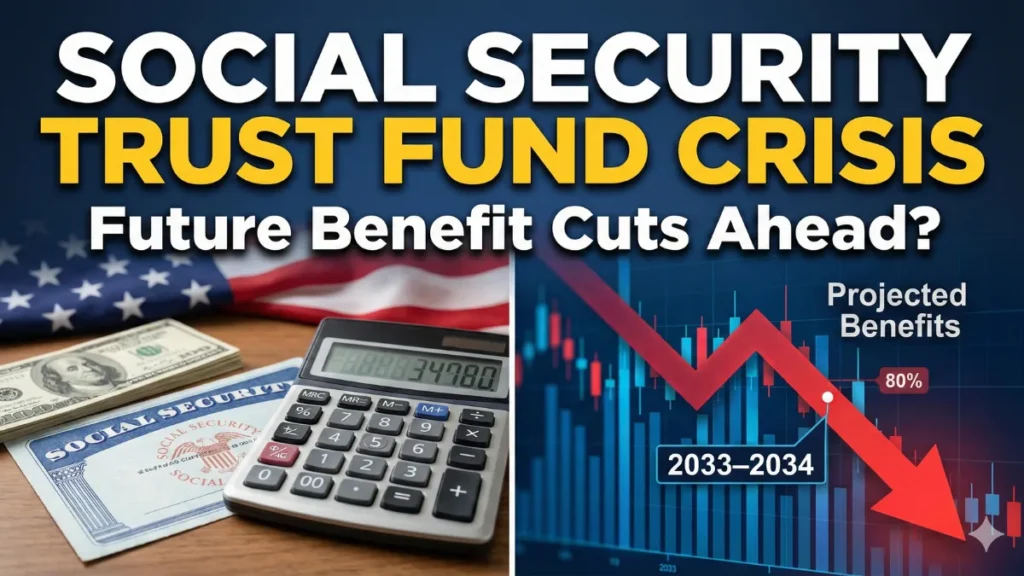
- The OASI trust fund could be depleted around 2033
- The DI trust fund is expected to remain solvent for several decades
- If combined, total reserves could be depleted around 2034
- After depletion, incoming payroll taxes may cover about 80–81% of scheduled benefits
This does not mean the program would run out of money entirely. Payroll taxes would continue to flow in. However, benefits would be reduced to match incoming revenue if no reforms are passed.
Key Social Security Data
Important program figures include:
- Total beneficiaries: more than 67 million
- Primary funding source: payroll taxes (FICA)
- Payroll tax rate: 12.4% split between employers and employees
- Taxable earnings cap (2024): $168,600
- Average retired worker benefit: approximately $1,900 per month
- Trust fund reserves: about $2.7 trillion
These projections depend on assumptions about wage growth, employment levels, and life expectancy.
Why the Trust Fund Is Facing Shortfalls
Several long-term trends are contributing to the funding gap.
Aging Population
The large Baby Boomer generation is retiring. As a result, the number of beneficiaries continues to rise faster than the number of workers.
Lower Worker-to-Retiree Ratio
Decades ago, more than five workers supported each retiree. Today, that ratio is closer to three workers per beneficiary and continues to decline.
Longer Life Expectancy
People are living longer than in previous generations. Therefore, benefits are paid out for more years.
Slower Labor Force Growth
Lower birth rates and slower workforce expansion reduce payroll tax revenue growth.
Earnings Cap Limitations
Social Security taxes apply only to earnings up to a certain cap. Income above that threshold is not subject to Social Security payroll tax.
Together, these structural factors create a long-term imbalance between incoming revenue and promised benefits.
What Future Benefit Cuts Could Look Like
If Congress does not implement reforms before reserves are depleted, automatic reductions would occur under current law.
Projected impacts include:
- Across-the-board benefit cuts of roughly 19% to 21%
- Reduced monthly payments for current retirees
- Lower initial benefits for future retirees
- Increased financial strain for households heavily dependent on Social Security
For example, a retiree receiving $2,000 per month could see payments reduced to about $1,600 if benefits were cut by 20%.
These reductions would apply broadly unless lawmakers modify the system.
Who Could Be Most Affected
While all beneficiaries could feel the impact, some groups may face greater challenges.
Retirees With Limited Savings
Individuals who rely heavily on Social Security for income may struggle to absorb a significant reduction.
Lower-Income Seniors
For many seniors, Social Security represents 70% or more of total income. Fixed housing costs and limited flexibility increase financial pressure.
Near-Retirees
Workers in their 50s and early 60s may have less time to adjust savings plans if reforms are delayed.
Younger Workers
Future generations could face adjustments such as changes to benefit formulas or retirement age increases as part of long-term reforms.
Possible Policy Solutions
Lawmakers have debated several options to restore long-term solvency.
Common proposals include:
- Increasing the payroll tax rate
- Raising or eliminating the taxable earnings cap
- Gradually increasing the full retirement age
- Adjusting cost-of-living formulas
- Reducing benefits for higher-income retirees
Any reform would require congressional action. Changes could be phased in gradually to limit disruption.
Historically, Social Security reforms have been enacted before full depletion occurred. Policymakers still have time to act, but delays could require more significant adjustments.
What Workers and Retirees Can Do Now
Although legislative decisions will shape the final outcome, individuals can take practical steps today.
Consider the following:
- Review your annual Social Security statement
- Evaluate expected retirement income sources
- Build additional savings through retirement accounts
- Diversify income beyond Social Security
- Reassess retirement budgets and expenses
Delaying benefits beyond full retirement age increases payments by about 8% per year until age 70. This strategy can help strengthen retirement income.
Final Thoughts
The Social Security Trust Fund Crisis represents a long-term funding imbalance rather than an immediate shutdown. However, projections suggest that without legislative action, automatic benefit reductions could occur in the early 2030s.
For retirees and workers alike, staying informed and planning ahead is essential. While policymakers debate solutions, understanding potential outcomes helps individuals make thoughtful financial decisions for the future.
FAQs For Social Security Trust Fund Crisis
No. Payroll taxes will continue to fund benefits. However, payments could be reduced if reserves are depleted without reform.
Current projections suggest depletion around 2033–2034 if no legislative changes occur.
Estimates suggest benefits could be reduced to about 80–81% of scheduled levels.
If depletion occurs without reform, reductions would likely apply broadly to current and future beneficiaries.
Yes. Congress has the authority to adjust taxes, benefits, or both to restore long-term solvency.

Diana Luci is a Senior Financial Analyst and Policy Researcher based in the US. She specializes in breaking down complex government updates, IRS changes, and economic trends into clear, actionable insights for everyday Americans.