As the turbulent spring weather patterns shift across the United States, millions of Americans are suddenly finding their smartphones blaring with terrifying emergency alarms. The transition from a calm afternoon to a catastrophic weather event can happen in a matter of minutes. However, the biggest danger during severe storm season is not just the wind or the rain it is public complacency. Because people constantly receive alerts on their televisions and mobile devices, a dangerous “alert fatigue” has set in. To protect your home and your family, you must clearly understand the specific language used by the National Weather Service and know exactly when it is time to take immediate physical shelter.
US Hybrid Cars 2026: Why Americans Are Ditching EVs
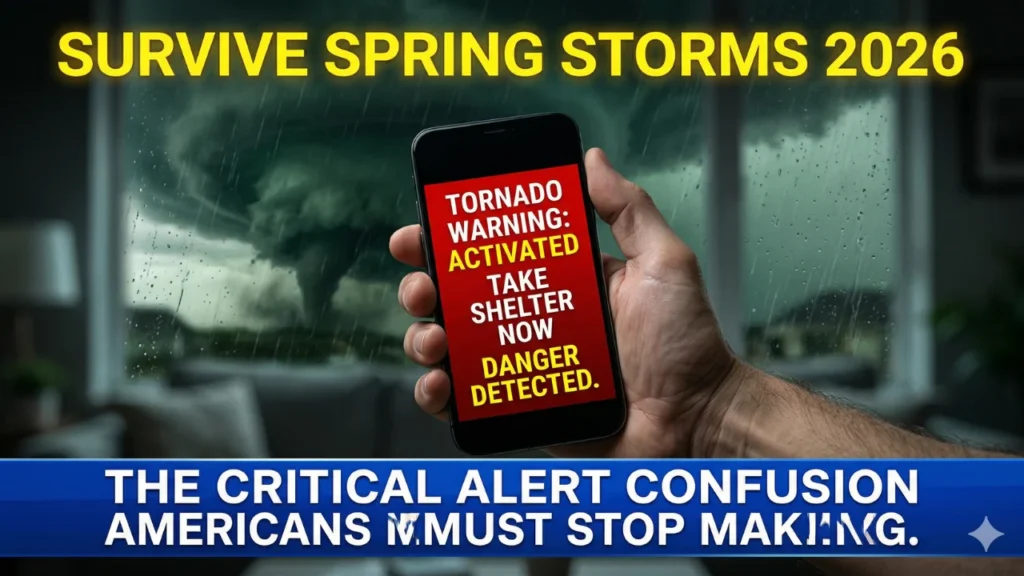
The Critical Difference: Watch vs. Warning
The absolute most common and fatal mistake Americans make is confusing a “Watch” with a “Warning.” The easiest way to remember the difference is the famous “taco” analogy used by meteorologists.
A Tornado Watch simply means that the atmosphere has all the right ingredients to create a tornado. The air is unstable, the wind shear is present, and storms are developing. It means you should watch the sky, keep your phone fully charged, and review your family’s safety plan.
Extinct Trees of North America: Vanished Forests Explained
A Tornado Warning, however, is an immediate, life-threatening emergency. A warning means that a trained weather spotter has physically seen a funnel cloud touching the ground, or a massive, rotating tornado has been officially detected by local Doppler radar. When a warning is issued for your specific county, you no longer have time to pack bags or look out the window; you must immediately move to the lowest, most interior room of your house.
The Silent Killer: Flash Flood Warnings
While tornadoes get the most media attention, the deadliest weather events in the United States year after year are actually flash floods. A flash flood warning is incredibly deceptive because the danger often occurs miles away from where the actual rain is falling. A massive thunderstorm upstream can send a wall of raging water down a dry riverbed or a suburban street in minutes.
Artemis II Launch: NASA’s Historic Return to the Moon
The golden rule of flood survival is simple: “Turn Around, Don’t Drown.” It only takes six inches of fast-moving water to completely knock a full-grown adult off their feet, and it only takes twelve to eighteen inches of flowing water to physically lift a modern SUV or pickup truck and sweep it away. If you see water covering a roadway, never attempt to drive through it. The physical road beneath the water may have already completely washed away.
Building Your Safe Room Protocol
You cannot wait until the emergency sirens are blaring to figure out where your family is going to hide. If you do not have a dedicated underground basement or a concrete storm shelter, you must identify the safest room on the lowest floor of your home. This is typically an interior bathroom, a closet, or a central hallway completely devoid of exterior windows.
Netflix Prices 2026: How to Beat the New Subscription Hikes
Keep a dedicated emergency kit inside this specific room all season long. The kit should include a battery-powered NOAA weather radio, high-powered LED flashlights, thick shoes to walk over broken glass after a storm, and a loud whistle to signal for help if your home sustains structural damage.

Diana Luci is a Senior Financial Analyst and Policy Researcher based in the US. She specializes in breaking down complex government updates, IRS changes, and economic trends into clear, actionable insights for everyday Americans.