
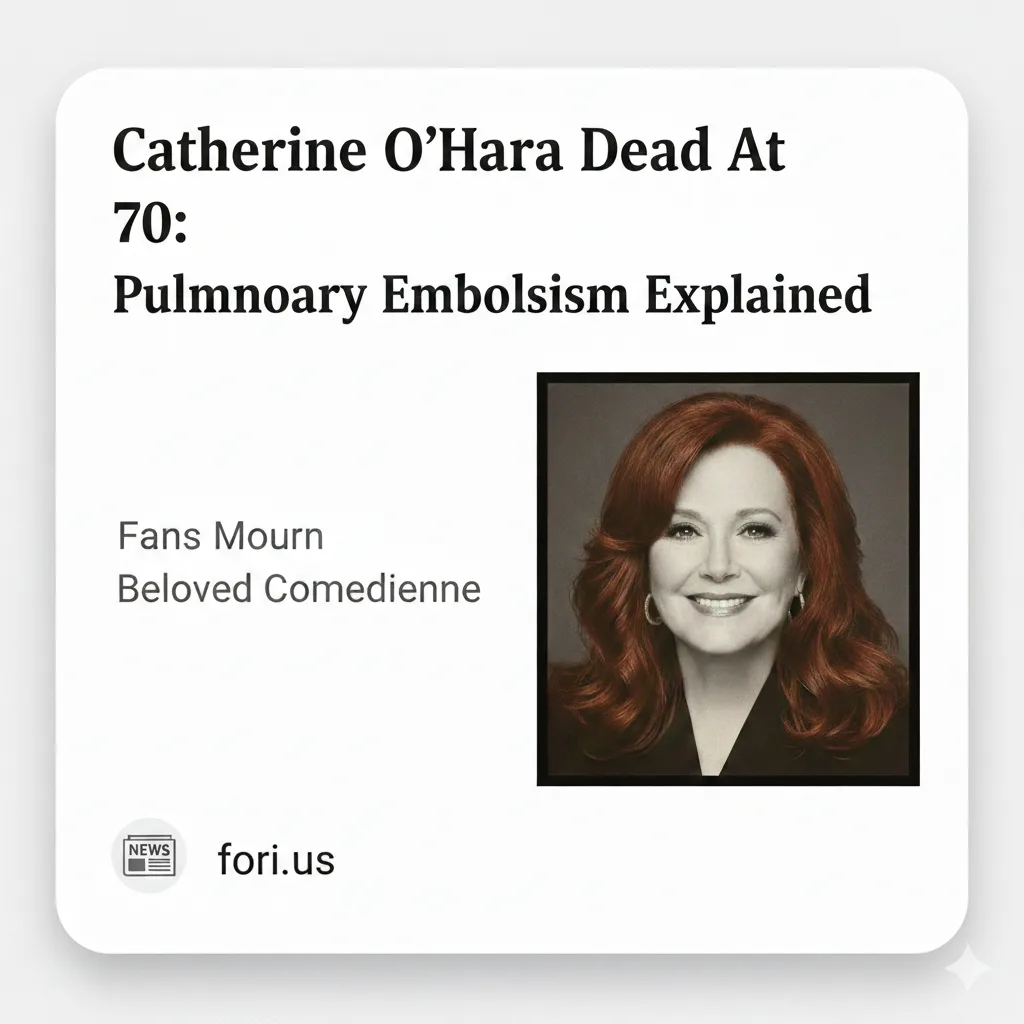
News about the death of Catherine O’Hara has shocked fans around the world. According to an autopsy report shared by US media, the actress died due to a pulmonary embolism.
Many people recognize Catherine O’Hara for her iconic roles in movies and television, especially her performance as the mother in Home Alone. After the report became public, searches for “pulmonary embolism” increased rapidly, as people tried to understand what it is and how it can become fatal.
What the Autopsy Report Says
According to the autopsy details reported by local US news outlets, Catherine O’Hara died due to complications caused by a pulmonary embolism.
A pulmonary embolism happens suddenly in many cases. It can affect even people who appear healthy from the outside. Doctors often describe it as a medical emergency that needs immediate treatment.
The report did not suggest foul play. Instead, it pointed clearly to a medical condition that can turn life-threatening within minutes or hours if not treated in time.
What Is Pulmonary Embolism?
A pulmonary embolism occurs when a blood clot blocks one of the arteries in the lungs.
Most of the time, this clot starts in the legs. It forms as a deep vein thrombosis, also called DVT. When part of that clot breaks free, it can travel through the bloodstream and get stuck in the lungs.
Once this happens, oxygen flow reduces sharply. The heart also comes under heavy pressure, which can lead to sudden collapse.
Why Pulmonary Embolism Is So Dangerous
Pulmonary embolism is dangerous because it often strikes without warning. Many people do not realize they have a clot until it reaches the lungs.
Some key reasons why it is deadly include:
- It blocks oxygen supply to vital organs
- It puts extreme stress on the heart
- Symptoms may look like common problems at first
- Delay in treatment increases risk quickly
Doctors say that large clots can cause instant death, while smaller clots may still cause serious damage if ignored.
Common Symptoms People Often Miss
One of the biggest dangers of pulmonary embolism is that symptoms are easy to miss. Many people think it is just anxiety, chest strain, or breathing trouble.
Common warning signs include:
- Sudden shortness of breath
- Sharp chest pain, especially while breathing
- Fast or irregular heartbeat
- Dizziness or fainting
- Coughing, sometimes with blood
If these symptoms appear suddenly, doctors advise seeking emergency medical help immediately.
Who Is at Higher Risk?
Pulmonary embolism can happen to anyone, but some people face higher risk.
Risk factors include:
- Long periods of sitting or bed rest
- Recent surgery or injury
- Smoking
- Obesity
- Pregnancy
- Certain medical conditions affecting blood clotting
Even with these factors, doctors warn that pulmonary embolism can still occur in people without known risks.
How Doctors Diagnose Pulmonary Embolism
Doctors use a mix of tests to confirm pulmonary embolism. These tests help them locate clots and assess lung function.
Common diagnostic tools include:
- CT pulmonary angiography
- Blood tests like D-dimer
- Ultrasound of the legs
- Chest X-ray
- ECG to check heart strain
Early diagnosis often saves lives, which is why doctors stress quick action.
Treatment Options for Pulmonary Embolism
Treatment depends on the size of the clot and the patient’s condition.
Doctors may use:
- Blood-thinning medicines
- Clot-breaking drugs in severe cases
- Oxygen therapy
- Surgery in rare, critical situations
With early treatment, many patients recover well and live normal lives.
Why Catherine O’Hara’s Death Has Sparked Awareness
Catherine O’Hara’s death has brought global attention to pulmonary embolism. Many fans admit they had never heard of it before reading the autopsy report.
When a well-known public figure dies from a medical condition, it often helps spread awareness. Health experts hope this news encourages people to take symptoms seriously and seek medical help faster.
Can Pulmonary Embolism Be Prevented?
In some cases, yes. Prevention focuses on reducing clot formation.
Doctors suggest:
- Staying active during long travel
- Drinking enough water
- Following post-surgery movement advice
- Taking prescribed blood thinners when advised
Small steps can make a big difference.
FAQs
According to the autopsy report, she died due to a pulmonary embolism.
Yes. It often happens suddenly and can worsen very quickly.
Yes. Some people experience few or no early symptoms.
Yes. Early diagnosis and treatment greatly improve survival.
It affects thousands of people every year worldwide and remains underdiagnosed.
Final Thoughts
The death of Catherine O’Hara is a heartbreaking reminder of how serious pulmonary embolism can be. It shows that even conditions we rarely talk about can turn fatal without warning.
Understanding the symptoms and acting quickly can save lives. Awareness, timely medical care, and prevention remain the strongest tools against pulmonary embolism.
