
The discussion around the NHS pay rise 2026 is gaining attention across the United Kingdom. Healthcare staff, unions, and government officials are all watching closely as conversations about salaries, inflation and public spending continue.
For many NHS workers, pay remains a key issue after years of pressure, high workloads and rising living costs. With 2026 approaching, questions are growing about whether new increases will match inflation and improve working conditions.
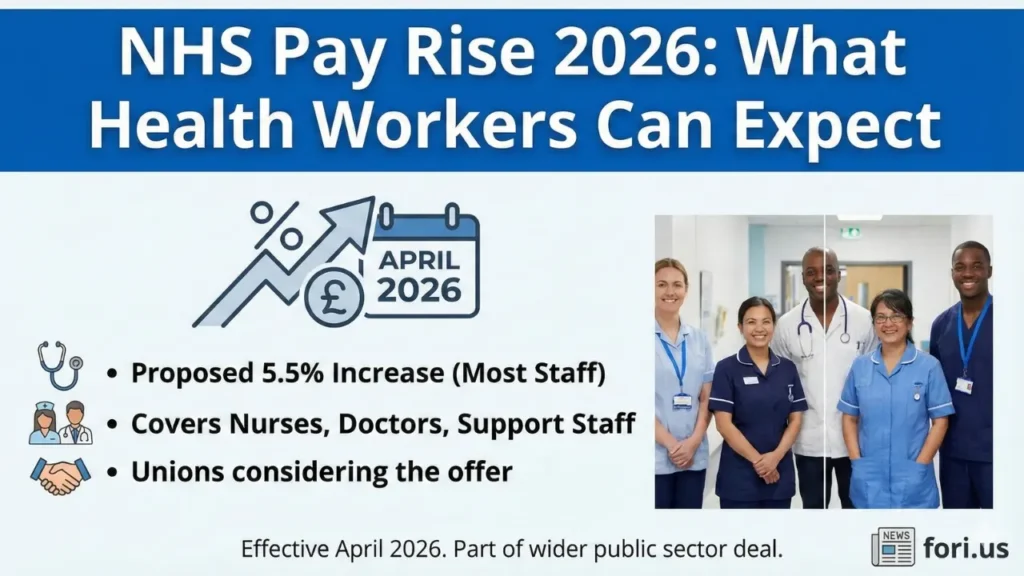
Why NHS Pay Is a Major Issue
National Health Service employs more than a million people across England, Scotland, Wales and Northern Ireland. These include:
- Nurses
- Doctors
- Paramedics
- Support staff
- Administrative workers
In recent years, many staff members have raised concerns about pay not keeping pace with inflation. Rising household bills and living costs have increased pressure on healthcare workers.
How NHS Pay Is Decided
Pay for most NHS workers is determined through a review system. Independent pay review bodies assess:
- Economic conditions
- Inflation levels
- Recruitment and retention issues
- Government budgets
After recommendations are made, the government decides whether to accept or adjust them.
This process often leads to negotiations between ministers and healthcare unions.
What Could Happen in 2026?
While exact figures are not confirmed, experts expect discussions around:
- Percentage-based pay increases
- One-off payments
- Targeted raises for certain roles
- Measures to improve retention
A key question is whether any proposed rise will match the cost of living in 2026.
Inflation and Cost of Living Pressure
Inflation plays a big role in public sector pay discussions. When inflation rises, workers feel the impact in:
- Food prices
- Energy bills
- Housing costs
- Transport expenses
If pay increases remain below inflation, real income can decrease.
That is why healthcare unions often push for rises that reflect current economic realities.
Recruitment and Staff Shortages
The NHS continues to face recruitment challenges in several departments. Staff shortages can increase workload and stress for existing employees.
Competitive pay can help:
- Attract new healthcare workers
- Retain experienced professionals
- Reduce reliance on temporary staff
Improved retention may also help maintain patient care quality.
Government Budget Challenges
Public sector pay increases require significant funding. Government decisions must balance:
- Healthcare funding
- Education budgets
- Infrastructure spending
- National economic stability
Budget constraints often influence final pay decisions.
Union Response and Negotiations
Healthcare unions play a strong role in pay negotiations. They represent nurses, doctors and other NHS staff.
Unions often:
- Gather member feedback
- Negotiate directly with government
- Organise ballots if needed
- Advocate for fair pay
Past disputes show that pay discussions can become politically sensitive.
How a Pay Rise Could Affect Patients
Some people ask how NHS pay increases impact patient care.
Better pay may:
- Improve staff morale
- Reduce turnover
- Strengthen workforce stability
Stable staffing levels often lead to more consistent patient services.
However, budget pressures could influence how resources are allocated elsewhere.
Differences Across UK Nations
Healthcare is managed separately across the UK nations. That means pay decisions can vary in:
- England
- Scotland
- Wales
- Northern Ireland
Each government may respond differently based on regional budgets and priorities.
Public Opinion on NHS Pay
Public support for healthcare workers remains strong. Many people recognise the intense pressure staff face, especially after challenging years in the health sector.
At the same time, taxpayers also consider the broader economic situation.
Balancing fair pay with public spending remains a complex issue.
What Happens Next?
As 2026 approaches, several steps are expected:
- Review body recommendations
- Government response
- Possible union discussions
- Final pay announcement
Updates are likely once official figures are confirmed.
Healthcare workers across the country will watch closely for clarity.
FAQs
It refers to potential salary increases for NHS staff in 2026.
Independent review bodies make recommendations, and the government makes the final decision.
That depends on economic conditions and government policy at the time.
Yes, pay decisions can vary between England, Scotland, Wales and Northern Ireland.
It affects staff morale, recruitment, retention and overall healthcare services.
Final Thoughts
The NHS pay rise 2026 will be an important topic for healthcare workers and the public alike. Fair pay can support staff retention and morale, while economic pressures may influence final decisions.
As discussions continue, clarity will come through official announcements. For now, the focus remains on balancing fair compensation with national financial stability.
