Negotiate medical bills 2026 strategies are currently the most critical financial tools for American families facing crippling healthcare debt this year. The United States healthcare system is notoriously expensive, and receiving a surprise hospital invoice for thousands of dollars can completely destroy your monthly budget.
However, what most patients do not realize is that the initial number printed on that piece of paper is rarely the final price. Hospitals intentionally inflate their initial charges, expecting insurance companies to bargain them down.
Break Your Lease 2026: Move Out Without Penalty
If you are uninsured, underinsured, or simply facing a massive high-deductible plan, you must learn how to bargain just like the massive insurance corporations do. Here is your step-by-step guide to legally slashing your hospital debt.
Key Takeaways for USA Patients
- The Reality: The first hospital bill you receive is simply an opening offer. Everything in the American healthcare billing system is negotiable.
- The Trick: Simply asking for a detailed breakdown of charges often causes the hospital’s billing department to “magically” drop the total price to avoid auditing errors.
- The Safety Net: Federal law requires all non-profit hospitals to offer financial assistance programs, but they will never explicitly tell you about them unless you ask.
Stop AI Voice Scams: Protect Your Family Today
How to Negotiate Medical Bills 2026 Step-by-Step
To successfully reduce your outstanding balance, you must stop ignoring the letters in your mailbox and take an active, analytical approach. Follow this exact sequence to protect your wallet and reduce your financial burden today:
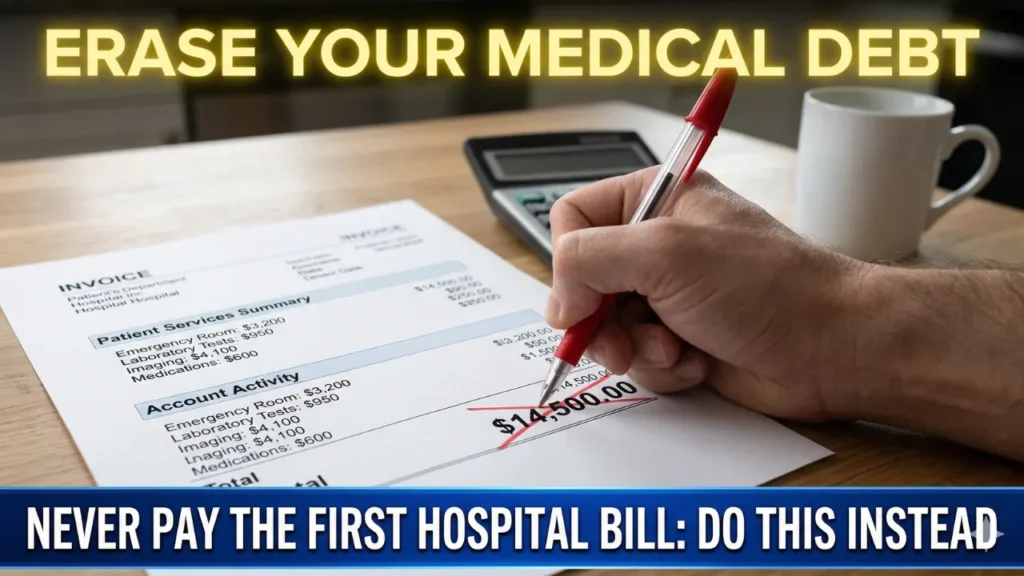
- Demand an Itemized Bill: Never pay a generic summary bill that just says “Laboratory Fees: $4,000.” Call the billing department and formally request a fully itemized invoice with specific CPT (Current Procedural Terminology) codes. When hospitals are forced to list every single charge (like charging $50 for a single aspirin), they often quietly remove excessive fees before sending the new document.
- Search for ‘Upcoding’ Errors: Once you have the itemized list, check it carefully for massive errors. “Upcoding” is a common illegal practice where a hospital charges you for a more expensive, complex procedure than you actually received. If you were only observed in the ER for an hour but were billed for a “Level 5 Critical Care” visit, dispute the charge immediately in writing.
- Ask for the ‘Cash Pay’ Rate: If you do not have good insurance, do not let them charge you the inflated insurance rate. Call the financial office and ask, “What is your absolute lowest self-pay or cash-pay rate?” Hospitals save massive amounts of administrative time when patients pay directly, and they will frequently offer a 30% to 50% discount if you can pay a lump sum today.
- Apply for Charity Care: By law, non-profit hospitals (which make up nearly 60% of US hospitals) must offer “Charity Care” or financial assistance programs. If you earn under a certain income threshold, they are legally required to forgive your entire debt or heavily reduce it. Go to the hospital’s official website and search for their financial assistance application form.
$5000 Monthly Retirement Income in 2026: Real Cost Breakdown and Planning Insights
Stop the Debt from Hitting Your Credit
Many patients panic and put massive medical bills on high-interest credit cards just to stop the hospital from calling them. This is a massive financial mistake. Medical debt is treated very differently from consumer credit card debt. Recent changes in the US credit reporting system mean that paid medical collection debts are no longer included on your credit reports, and unpaid medical debts under a specific dollar amount cannot be reported at all. Always try to negotiate a zero-interest payment plan directly with the hospital before ever involving a bank.
Frequently Asked Questions (FAQs)
Can I still negotiate a bill if it has already been sent to collections?
Yes. Once a bill goes to a third-party collection agency, the agency has usually bought that debt for pennies on the dollar. You can frequently call the collection agency and offer them a 40% lump-sum settlement to completely close the account.
What exactly is a professional patient advocate?
If your bill is astronomically high (tens of thousands of dollars) and too complex to handle alone, you can hire a professional medical billing advocate. They expertly audit your hospital records and negotiate on your behalf, usually taking a percentage of the money they save you.
Does asking to negotiate medical bills 2026 make me look bad to my doctor?
Absolutely not. Your actual medical doctor has absolutely nothing to do with the corporate billing department. Bargaining with the financial office will never impact the quality of physical care you receive from your physician.
Can a hospital legally charge me for something I did not consent to?
Under the “No Surprises Act,” you have strong federal protections against unexpected out-of-network charges, especially during emergency room visits. If you went to an in-network facility, they generally cannot legally bill you for an out-of-network doctor you did not explicitly choose.
How long do I have to dispute a hospital invoice?
Do not wait. You generally have the best leverage if you start the dispute process within 30 days of receiving the first invoice. Waiting several months limits your options and increases the chance of the account going to collections.
Federal Retirement COLA Guide 2026: How Inflation Adjustments Protect Your Pension

Diana Luci is a U.S.-based Latest and financial news writer covering Social Security, IRS tax updates, SNAP benefits, Medicare, and government assistance programs. She focuses on simplifying complex financial and policy topics into clear, easy-to-understand information for everyday readers.