A groundbreaking shift in how public assistance programs operate is sparking an intense nationwide debate across the United States. If you or your family rely on federal food assistance, the newly implemented Arkansas SNAP nutrition waiver is officially changing the rules of the grocery aisle.
Beginning this month, Arkansas has become the very first state in the country to successfully implement a federal waiver that strips specific junk food items from the list of approved Supplemental Nutrition Assistance Program purchases, forcing millions of onlookers to question if other states will soon follow suit.
Here is a complete breakdown of what items are officially banned, how the new checkout system works, and the massive political backlash surrounding the decision.
Read Also-Medicare Home Health Payment 2027: CMS Announces New Base Rates and Quality Updates
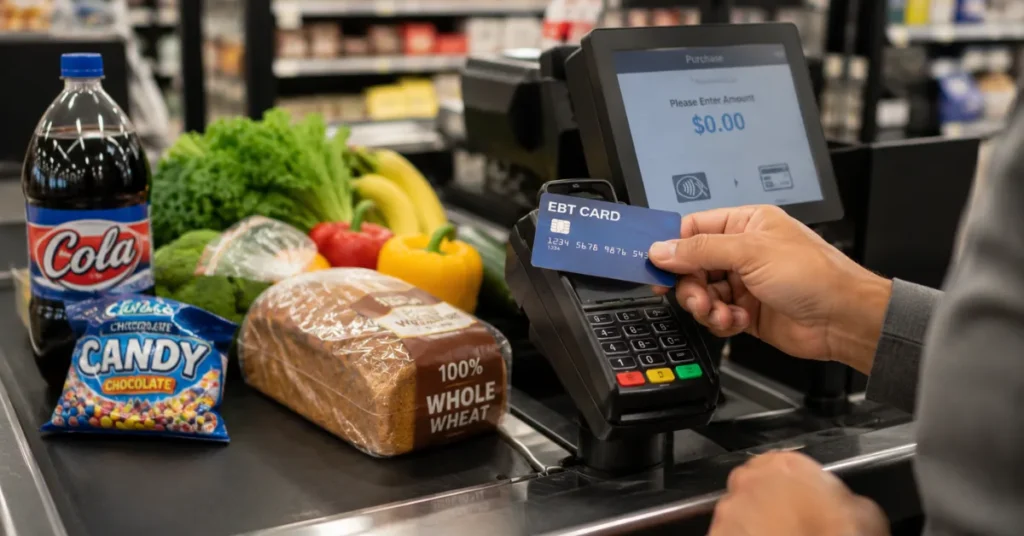
The Banned Items Under the Arkansas SNAP Nutrition Waiver
For over a decade, conservative lawmakers in various states have tried to restrict food stamp purchases, arguing that taxpayer funds should not support unhealthy diets. While the USDA historically rejected these requests, a newly approved federal waiver has allowed Arkansas to draw a hard line in the sand.
Under the new state guidelines, recipients can no longer use their Electronic Benefit Transfer (EBT) cards to purchase:
- Sugary Carbonated Beverages: All standard sodas, sweetened energy drinks, and fruit-flavored beverages with added sugars are completely banned.
- Bulk and Novelty Candy: Hard candies, chocolates, gummies, and marshmallow-based sweets are flagged as ineligible at the register.
- High-Sugar Prepared Snacks: Certain pre-packaged snack foods and sweets that exceed specific sugar-per-ounce thresholds have also been removed from the approved list.
State officials emphasize that the primary goal of the restriction is to combat rising obesity and diabetes rates among low-income populations by steering families toward healthier dietary choices.
How the New Grocery Checkout System Works
The biggest concern for everyday shoppers and retail grocers was how this massive policy shift would be enforced at the cash register without creating chaotic delays.
To tackle this, the state department worked alongside major point-of-sale network providers to update the digital inventory systems of all SNAP-approved retailers across Arkansas. Now, when an EBT card is swiped, the terminal automatically filters out the restricted barcodes. The shopper is then required to pay for any flagged soda or candy using a separate, personal payment method.
Read Also-SNAP Work Requirements 2026: Massive Changes and New Age Limits Explained
The Massive Backlash Over Food Restrictions
While proponents view the program as a necessary step toward public health, the policy has faced severe criticism from anti-hunger advocates and retail associations alike.
Organizations representing low-income families argue that the restrictions unfairly stigmatize SNAP recipients, strip away their personal autonomy, and do not address the root cause of poor nutrition—which is the high cost of fresh produce in low-income food deserts. Furthermore, the retail food industry has raised concerns over the administrative burdens placed on small mom-and-pop grocery stores that must manually update and manage shifting item eligibilities.
As the state monitors the initial rollout, the entire nation is watching closely to see if this controversial waiver sets a permanent new precedent for welfare programs across America.
Read Also- IRS Automatic Penalty Relief: New 2026 Exemption Program Explained

Diana Luci is a U.S.-based Latest and financial news writer covering Social Security, IRS tax updates, SNAP benefits, Medicare, and government assistance programs. She focuses on simplifying complex financial and policy topics into clear, easy-to-understand information for everyday readers.