Residents of Wyoming’s capital have spent months demanding answers regarding a mysterious contamination that disrupted local infrastructure. Now, city officials have finally named the corporate culprit behind the Cheyenne water system bacteria issue.
A massive $800 million Meta data center project is at the center of the controversy, leading the local Board of Public Utilities (BOPU) to officially suspend all industrial wastewater discharges associated with the tech giant’s cooling operations.
If you are following the rapid expansion of artificial intelligence infrastructure across the country, this local utility dispute serves as a major cautionary tale. Here is exactly what went wrong and how the city is handling the massive cleanup effort.
Read Also-Deadly Venezuela Terremoto: Death Toll Approaches 3,000 Amidst Rescue Operations
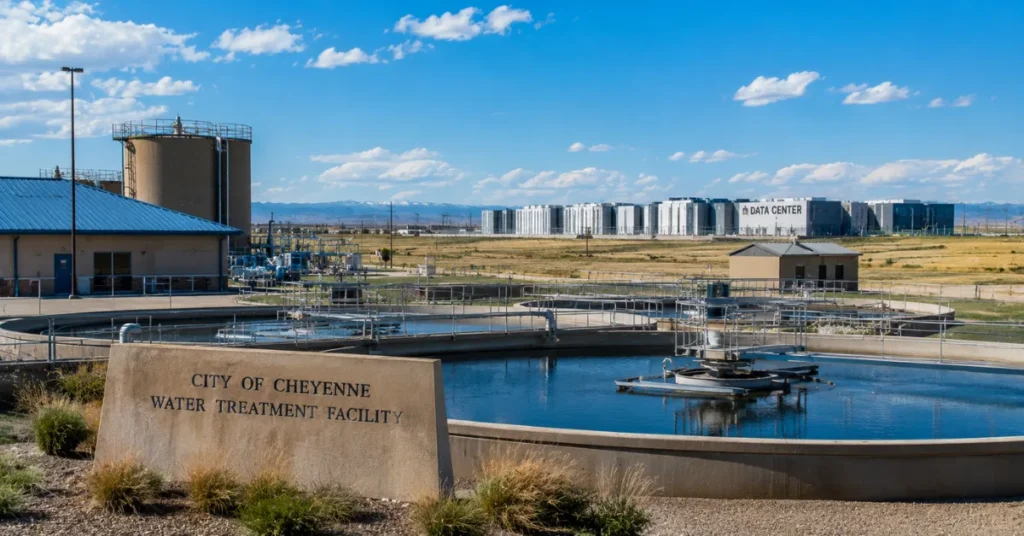
How a Data Center Caused the Cheyenne Water System Bacteria Issue
The trouble began back in February when lab staff discovered a rare, metal-resistant bacterium known as Cupriavidus gilardii during routine sampling. The contaminant severely interfered with operations at two city water reclamation plants, forcing the municipal reuse system entirely offline.
Because the city uses reclaimed water to irrigate public parks and golf courses, officials were highly concerned about the potential aerosol hazards of spraying the tainted water in green spaces.
Following a lengthy and tight-lipped investigation, the BOPU traced the hazardous discharge directly to Goat Systems LLC, the primary contractor building Meta’s sprawling 800,000-square-foot campus, known during its development phase as Project Cosmo.
The “Fill-and-Flush” Process Explained
So, how did a digital data center pollute a physical water supply? The problem stems from a common construction phase called “fill-and-flush.” Advanced AI data centers run massive closed-loop liquid cooling networks to keep servers from overheating. Before permanently sealing these loops, contractors fill the pipes with water and flush them out to clear any debris.
Goat Systems allegedly routed this initial flush water carrying the unapproved bacterium straight into Cheyenne’s sanitary sewer. The BOPU stated that Goat Systems was in significant noncompliance with local industrial pretreatment regulations. As a result, the city immediately revoked the contractor’s discharge privileges, and the suspension has since been broadened to cover all data centers utilizing city services.
Read Also-Active Flood Watch Updates: Severe July Storms Threaten Multiple US States
Cleanup Complete and Reuse System Restored
While learning that a major tech development triggered the months-long shutdown was an “unpleasant surprise” for city leaders, there is a positive resolution for residents. Meta has stated they are actively supporting their general contractor, who immediately stopped the discharges and shifted to hauling wastewater offsite for proper disposal.
Following rigorous cleaning protocols, independent testing at the affected Dry Creek and Crow Creek treatment facilities cleared in late June. The municipal reuse system is now safely back online, closing a highly stressful chapter for the local utility board.
Read Also- Brooklyn Bridge Fire: What Really Happened During the NYC July 4 Fireworks

Diana Luci is a U.S.-based Latest and financial news writer covering Social Security, IRS tax updates, SNAP benefits, Medicare, and government assistance programs. She focuses on simplifying complex financial and policy topics into clear, easy-to-understand information for everyday readers.