As the winter chill begins to fade across the United States, Americans are preparing for the annual tradition that disrupts sleep schedules but brings longer, sunnier evenings. The shift to Daylight Saving Time (DST) is just around the corner, and millions are searching their calendars to find out exactly when they need to adjust their clocks this year.
Despite ongoing debates and legislative attempts to make a single time standard permanent, the twice-a-year clock change remains a reality for 2026. Here is everything you need to know about the upcoming time change, when it happens, and the current status of the laws trying to stop it.
Student Loan Forgiveness 2026: Updates and Relief Rules
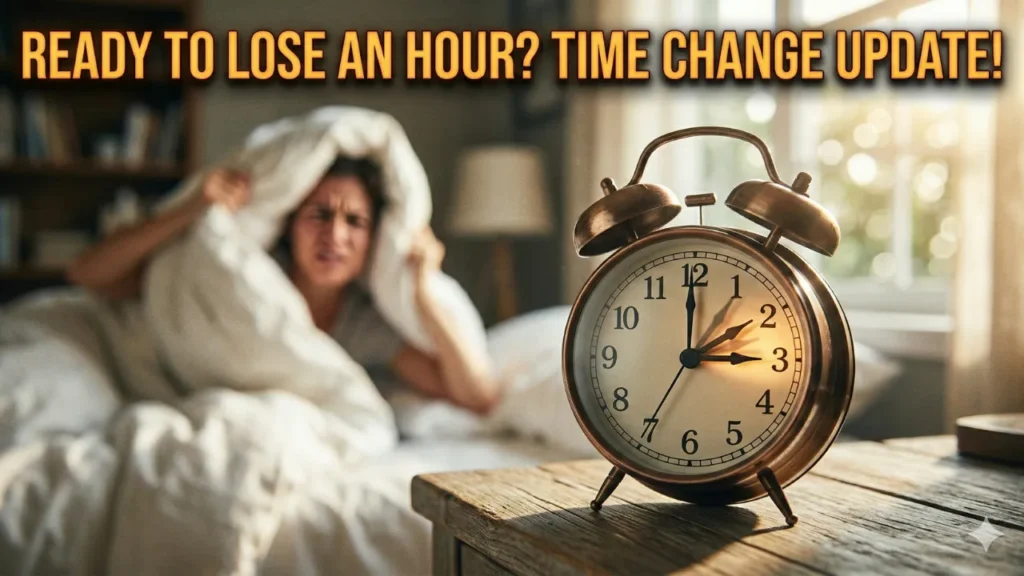
The Official 2026 Schedule: Spring Forward
In the United States, Daylight Saving Time always begins on the second Sunday in March. For this year, that means you will need to “spring forward” on Sunday, March 8, 2026.
Officially, the time changes at exactly 2:00 AM local time. At that moment, clocks will automatically skip ahead to 3:00 AM. While your smartphone, computer, and smart appliances will update themselves overnight, you will still need to manually adjust the clock on your microwave, oven, and older vehicle dashboards before you start your Sunday morning.
US Hybrid Cars 2026: Why Americans Are Ditching EVs
Which States Do Not Change Their Clocks?
Not everyone in the US participates in this biannual time shift. If you live in or are traveling to certain regions, you can ignore the alarm clock adjustments entirely.
The states and territories that observe permanent Standard Time and do not spring forward include:
- Hawaii: Due to its tropical location near the equator, daylight hours do not vary enough to justify the change.
- Most of Arizona: The Navajo Nation in northeastern Arizona does observe DST, but the rest of the state does not, primarily to keep the scorching summer evenings cooler.
- US Territories: Puerto Rico, Guam, American Samoa, and the US Virgin Islands also skip the time change.
What Happened to the Sunshine Protection Act?
A few years ago, the US Senate unanimously passed the Sunshine Protection Act, a bill designed to make Daylight Saving Time permanent across the country and end the clock-changing tradition forever.
However, the bill stalled in the House of Representatives. As of early 2026, lawmakers are still deadlocked. While health experts generally agree that stopping the time change is better for human circadian rhythms, they are divided on whether permanent Standard Time or permanent Daylight Saving Time is the healthier option. Until a consensus is reached, the biannual clock adjustments will continue.
IRS Paper Check Phaseout 2026: Why Your Refund is Frozen
How to Prepare for the Time Change
Losing an hour of sleep can have a surprising impact on your body. Studies show an increase in traffic accidents and workplace injuries on the Monday following the “spring forward” change.
To minimize the shock to your system, sleep experts recommend going to bed 15 to 20 minutes earlier each night leading up to March 8. Additionally, exposing yourself to bright, natural sunlight first thing in the morning can help reset your internal clock faster.
Frequently Asked Questions (FAQs)
1. When exactly does Daylight Saving Time 2026 start?
It officially begins at 2:00 AM local time on Sunday, March 8, 2026. Clocks will spring forward one hour.
2. Do we gain or lose an hour of sleep in March?
Because the clocks move forward from 2:00 AM to 3:00 AM, you effectively lose one hour of sleep over the weekend.
3. Will my iPhone update the time automatically?
Yes. As long as your smartphone or digital device is connected to the internet or a cellular network, it will update the time automatically overnight.
4. When does Daylight Saving Time end in 2026?
The time will “fall back” to Standard Time on the first Sunday in November, which will be November 1, 2026.
5. Has Congress decided to stop changing the clocks yet?
No. Despite several legislative attempts like the Sunshine Protection Act, no federal law has been finalized to make either Standard Time or Daylight Saving Time permanent nationwide.
IRS 2000 Payment March: Truth About 2026 Stimulus

Diana Luci is a Senior Financial Analyst and Policy Researcher based in the US. She specializes in breaking down complex government updates, IRS changes, and economic trends into clear, actionable insights for everyday Americans.