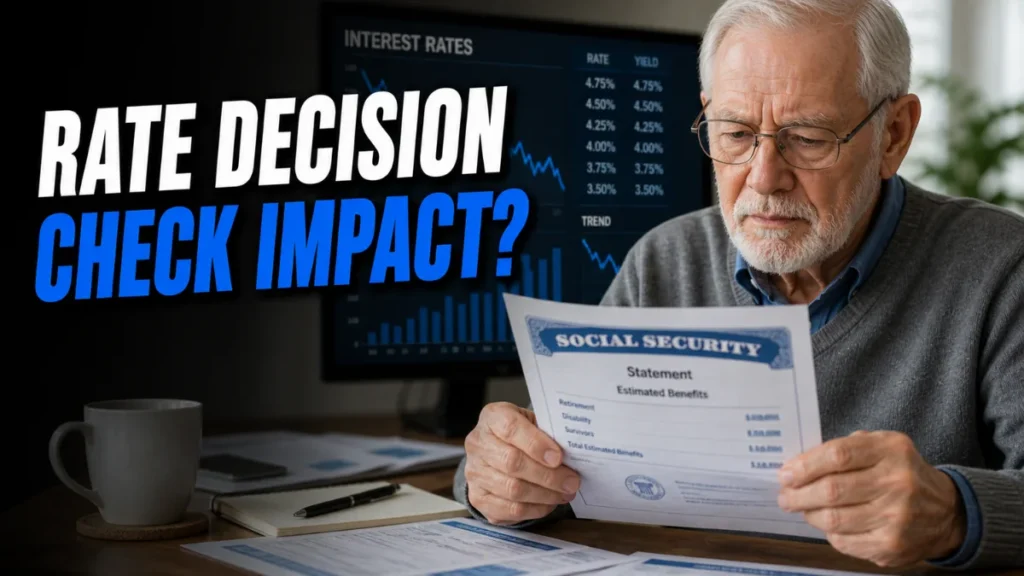
The latest move by the Federal Reserve has sparked questions among retirees across the United States. With inflation still a major concern, many are wondering how the Fed’s Interest Rate decision could impact their monthly Social Security payments.
The short answer is simple but important: your Social Security check will not change directly because of the Fed’s latest decision.
Stimulus Payments May 2026: No Federal Check but State Money Still Coming
Why Fed’s Interest Rate Does Not Change Your Benefits
The Federal Reserve recently chose to hold interest rates steady, continuing its pause as inflation remains elevated.
However, Social Security benefits are not tied to interest rates. Instead, they are determined by:
- Cost-of-living adjustments (COLA)
- Earnings history
- Federal benefit formulas
According to details, the Fed does not control Social Security payouts or COLA increases, meaning monthly checks remain unchanged regardless of rate decisions.
Federal Retirement COLA Guide 2026: How Inflation Adjustments Protect Your Pension
So even though the Fed’s move made headlines, retirees will not see any increase or decrease in their May payments.
How The Rate Decision Still Affects Retirees Indirectly
Even though your Social Security check stays the same, the Fed’s Interest Rate decision still affects your overall finances.
There are both positives and negatives:
Positive impact:
- Higher interest rates mean better returns on savings accounts
- CDs and Treasury investments continue to offer stronger yields
- Retirees with savings can earn more passive income
Facing A Devastating Eviction Notice? Secure Federal Rental Assistance 2026
Negative impact:
- Borrowing remains expensive
- Credit cards, personal loans, and mortgages stay costly
- Retirees relying on borrowing may face financial pressure
The Fed’s decision to pause rates signals that inflation is still not under full control, which continues to influence everyday expenses.
What Retirees Should Do Right Now
Since Social Security payments remain unchanged, financial planning becomes even more important.
Experts suggest focusing on:
- Budgeting monthly expenses carefully
- Comparing loan options before borrowing
- Taking advantage of higher interest rates on savings
Even small adjustments like reducing unnecessary spending or earning more from savings—can help balance the impact of rising costs.
What This Means Going Forward
The Fed is expected to closely monitor inflation before making any future rate changes.
While future rate cuts could ease borrowing costs, they still will not directly affect Social Security payments.
For retirees, the key takeaway is clear: your benefits are stable, but your overall financial situation depends on how interest rates shape the broader economy.
Drowning In Student Debt? Unlock Federal Loan Forgiveness 2026 In 120 Payments

Diana Luci is a U.S.-based Latest and financial news writer covering Social Security, IRS tax updates, SNAP benefits, Medicare, and government assistance programs. She focuses on simplifying complex financial and policy topics into clear, easy-to-understand information for everyday readers.