Millions of Americans depend on Social Security to cover everyday expenses, from groceries and rent to prescription drugs and utility bills. That is why every annual Cost-of-Living Adjustment (COLA) attracts nationwide attention.
The latest update points to a 2.8% increase in Social Security benefits for 2026. While the percentage is smaller than some of the larger adjustments seen in recent years, it would still provide higher monthly payments for millions of retirees, disabled workers, and SSI recipients.
For many households, even a modest increase can make budgeting a little easier as living costs continue to evolve.
Read Also- Two SSI Payments in July? Here’s Why August Looks Different
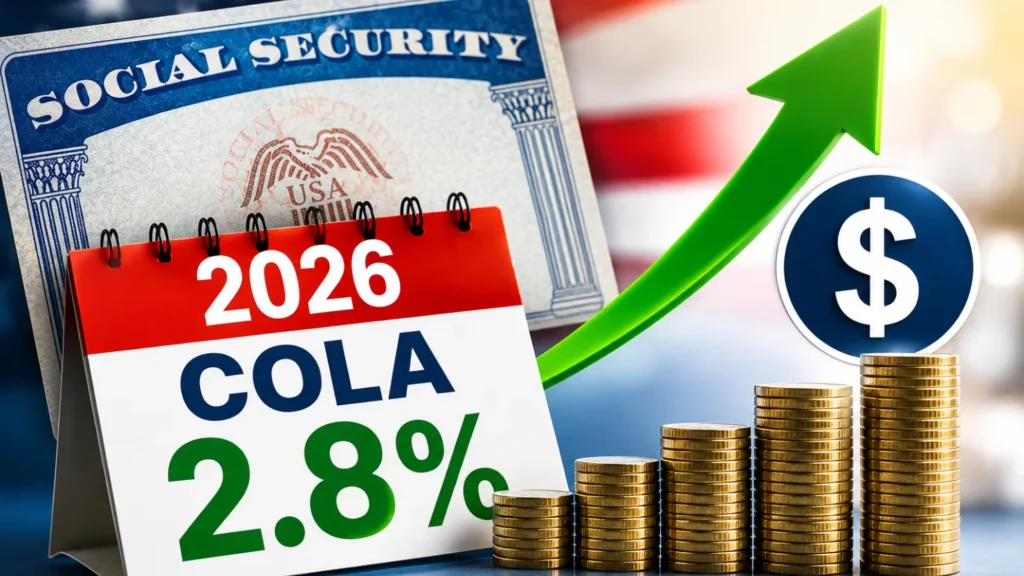
Social Security 2026 COLA: What the 2.8% Increase Means
| Main Update | 2026 Social Security COLA |
| COLA Amount | 2.8% |
| People Affected | Around 75 million beneficiaries |
| Average Monthly Increase | About $56 (estimated average) |
| Payment Start | January 2026 for Social Security, earlier for eligible SSI recipients |
What Is the 2026 Social Security COLA?
The annual Cost-of-Living Adjustment, commonly known as COLA, is designed to help Social Security benefits keep pace with inflation.
Instead of remaining fixed year after year, benefit amounts are reviewed annually using inflation data collected by the federal government. When consumer prices rise, Social Security payments can also increase to help protect purchasing power.
For 2026, the adjustment is expected to add roughly 2.8% to monthly benefit amounts for eligible recipients.
How Much Could Monthly Benefits Increase?
The exact dollar amount depends on each person’s current benefit.
Someone receiving a larger monthly benefit will generally see a bigger dollar increase than someone receiving a smaller payment.
Current estimates suggest the average retired worker could receive approximately $56 more each month, although individual payment amounts will vary.
Read Also-Working Retirees Could Get Full Social Security Checks Under New Proposal
Why the Increase Is Smaller Than Previous Years
Many retirees remember the unusually large COLA increases that followed periods of high inflation.
The 2026 adjustment is lower because inflation has moderated compared with those earlier years. While prices continue to change, they have not increased at the same pace seen during the peak inflation period.
A smaller COLA does not necessarily mean benefits are losing value. Instead, it reflects slower overall price growth measured through the government’s inflation index.
How the Government Calculates COLA
Each year, officials compare inflation data from the third quarter of one year with the same period from the previous year.
The calculation uses the Consumer Price Index for Urban Wage Earners and Clerical Workers (CPI-W), which tracks price changes across a wide range of everyday goods and services.
That formula has been used for decades to determine annual Social Security benefit adjustments.
Who Will Receive the Higher Payments?
The adjustment applies to most people receiving:
- Social Security retirement benefits
- Social Security disability benefits
- Survivor benefits
- Supplemental Security Income (SSI), based on its payment schedule
Eligible beneficiaries do not need to submit a separate application. Updated payment amounts are applied automatically once the new rates take effect.
What Retirees Should Keep in Mind
Although higher monthly payments are welcome news, COLA is designed to maintain purchasing power rather than provide extra spending money.
Housing, insurance, food, and healthcare expenses can still rise at different rates depending on where someone lives.
For that reason, financial experts often recommend reviewing household budgets each year after new Social Security payment amounts become available.
Read Also-2032 Social Security Projection Raises New Questions for Retirees
Looking Ahead
The annual COLA remains one of the most closely watched updates for older Americans because it directly affects monthly retirement income.
While no adjustment can eliminate the impact of rising living costs, yearly updates help ensure that Social Security continues to respond to changing economic conditions.
For beneficiaries planning their finances, understanding how COLA works can make it easier to estimate future income and prepare for the year ahead.
FAQs
What is the 2026 Social Security COLA?
The 2026 Social Security COLA is a 2.8% annual cost-of-living adjustment expected to increase monthly benefits for eligible recipients.
Do I need to apply for the increase?
No. Eligible beneficiaries receive the updated payment automatically.
Will everyone receive the same dollar increase?
No. The increase depends on each person’s current monthly benefit amount.
Why is the 2026 COLA smaller than earlier increases?
Inflation has slowed compared with the unusually high levels seen in previous years.
When will higher payments begin?
Most Social Security beneficiaries would see the increase beginning with January 2026 payments, while eligible SSI recipients generally receive adjusted payments according to the SSI payment calendar.
The Social Security 2026 COLA is another reminder that benefit payments change over time as inflation changes. Although this year’s adjustment is more modest than some recent increases, it still represents additional monthly income for millions of Americans who depend on Social Security as part of their retirement or disability income.

Diana Luci is a U.S.-based Latest and financial news writer covering Social Security, IRS tax updates, SNAP benefits, Medicare, and government assistance programs. She focuses on simplifying complex financial and policy topics into clear, easy-to-understand information for everyday readers.