The growing discussion around the Social Security Shortfall is gaining attention as new projections highlight a critical timeline for the program’s future. According to the latest estimates, the Social Security trust fund could be depleted by 2034, raising concerns about reduced benefits and broader economic impact.
However, experts emphasize that even if the trust fund runs out, Social Security will not disappear. Instead, the system would continue operating with reduced payouts.
Warren Buffett Gets Social Security-Here’s How Much He Likely Receives
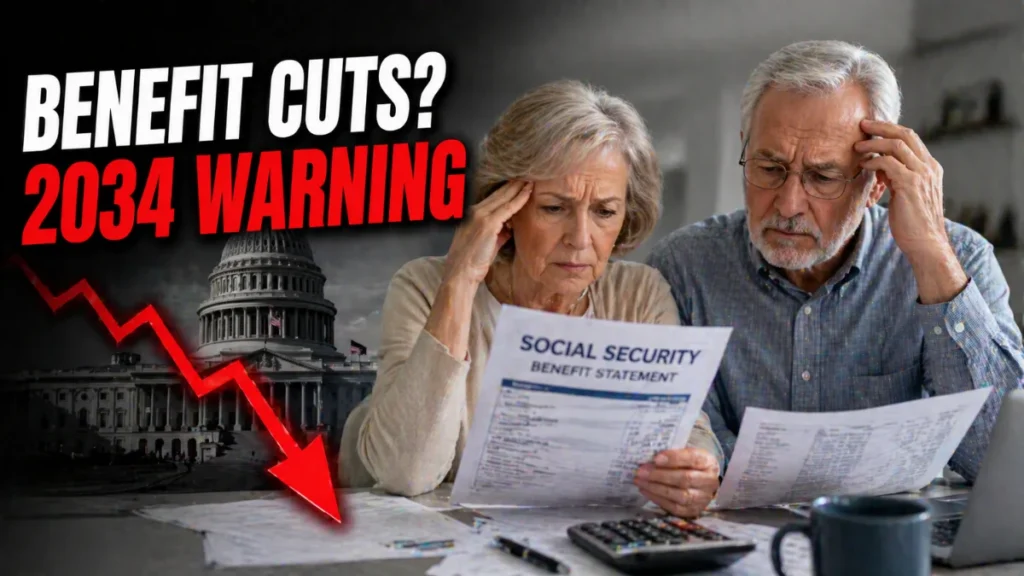
What Happens If The Trust Fund Is Depleted
The depletion of the trust fund does not mean payments will stop entirely.
Social Security is primarily funded through payroll taxes collected from current workers. Even after reserves are exhausted, these revenues will continue to support the system.
Estimates suggest that:
- Around 81% of scheduled benefits would still be paid
- An immediate reduction of roughly 20% could occur
This means retirees would continue receiving monthly payments, but at lower levels than currently expected.
EU Approves Social Security Coordination Deal To Simplify Cross-Border Benefits
Why The Social Security Shortfall Matters
For millions of Americans, Social Security is a primary source of income.
A sudden reduction in benefits could directly impact household finances, especially for retirees who rely heavily on these payments.
Many individuals may be forced to:
- Reduce spending
- Delay retirement
- Increase reliance on personal savings
This shift could create financial pressure across a large segment of the population.
Economic Impact Of Reduced Benefits
The Social Security Shortfall is not just a retirement issue it has broader economic implications.
Lower benefit payments would likely reduce consumer spending. Since retirees spend a large portion of their income on essentials like housing, food, and healthcare, any reduction can ripple through the economy.
$2000 Stimulus Check Update 2026: What’s Real and What’s Not
Data shows that Social Security plays a major role in economic activity:
- Over $1.38 trillion in benefits were paid in 2023
- These payments supported about $1.6 trillion in GDP
- Each dollar of benefits generates nearly $2 in economic activity
A reduction in benefits could therefore lead to slower economic growth and lower demand across multiple industries.
Industries That Could Be Affected
If benefit payments decrease, certain sectors may feel the impact more strongly.
These include:
- Healthcare services
- Retail businesses
- Housing and rental markets
These industries depend heavily on consistent consumer spending, particularly from retirees.
State and local governments may also face reduced tax revenues, adding further financial pressure.
Long-Term Outlook And Potential Decline
The long-term impact of the Social Security Shortfall could extend beyond immediate benefit cuts.
Projections suggest that:
- The funding gap could widen over time
- Benefit reductions could increase to over 30% by 2078 if no changes are made
This scenario highlights the importance of early policy action to prevent deeper economic consequences.
Social Security May 2026 Payment Timing: Longer Gap Explained for Millions of Americans
Policy Options Being Considered
To address the shortfall, policymakers are exploring several solutions.
Common proposals include:
- Increasing payroll taxes
- Raising or removing the taxable income cap
- Gradually increasing the retirement age
- Adjusting benefits for higher-income individuals
Each option involves trade-offs between financial sustainability and fairness.
Why Social Security Remains Stable Despite Challenges
Despite the concerns, Social Security is still considered one of the most stable government programs.
The shortfall represents a funding gap not a collapse of the system.
Historically, similar challenges have been addressed through policy adjustments, and experts believe that timely reforms could prevent severe disruptions.
What Americans Should Watch Next
The future of Social Security will largely depend on how quickly policymakers act.
If reforms are introduced early, benefit reductions could be minimized or avoided entirely.
For now, the focus remains on balancing fiscal responsibility with protecting retirement income for millions of Americans.

Diana Luci is a U.S.-based Latest and financial news writer covering Social Security, IRS tax updates, SNAP benefits, Medicare, and government assistance programs. She focuses on simplifying complex financial and policy topics into clear, easy-to-understand information for everyday readers.