In a major policy move aimed at strengthening retirement security, President Donald Trump has signed a new executive order designed to expand access to retirement savings for millions of American workers. The initiative focuses on individuals who currently lack access to traditional employer-sponsored plans such as 401(k)s, including part-time workers, small business employees, and independent contractors.
The decision reflects growing concern in the United States over retirement preparedness, as a significant portion of the workforce remains outside formal savings systems. The executive order introduces new pathways for workers to begin building retirement funds more easily and affordably.
65 With $2.5 Million-Will You Really Run Out Of Money In Retirement?
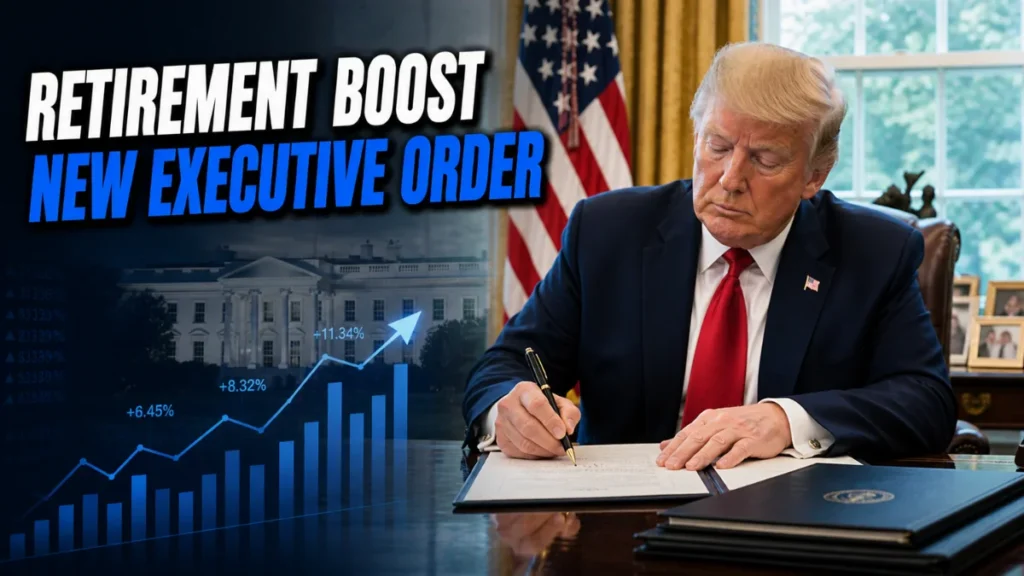
Trump Signs Executive Order To Expand IRA Access
The executive order directs federal agencies to develop a new online platform that will allow workers to explore and enroll in individual retirement accounts (IRAs). The platform is expected to offer a range of private-sector retirement options that meet strict standards for transparency, cost efficiency, and fiduciary responsibility.
A key feature of the initiative is the introduction of government-backed matching contributions for eligible individuals. Low-income workers could receive up to $1,000 per year in matching funds, directly deposited into their retirement accounts. This incentive is designed to encourage participation among workers who may not otherwise have the financial flexibility to save regularly.
The platform will also provide comparison tools, making it easier for users to evaluate different IRA options based on fees, performance, and long-term value. By simplifying the process, policymakers aim to remove barriers that have historically prevented millions from participating in retirement savings programs .
Social Security Credit For Parents? New Bill Could Change Retirement Benefits
Millions Of Workers Could Benefit From The Policy Shift
The need for expanded retirement access is substantial. Recent estimates suggest that roughly 56 million Americans do not have access to an employer-sponsored retirement plan. This includes workers in small businesses, gig economy participants, and self-employed individuals.
The new executive order is expected to significantly increase participation in retirement savings by offering a more flexible and accessible system. By allowing individuals to enroll independently of their employer, the initiative creates a more inclusive framework that reflects today’s evolving workforce.
The program also aligns with existing federal efforts to boost savings, including provisions that provide matching contributions for lower-income earners. Combined, these measures could lead to higher participation rates and improved long-term financial outcomes for millions of Americans.
Industry experts believe the policy could also influence employer behavior. As more workers seek access to retirement benefits, companies may face increased pressure to offer payroll-deduction options or other savings programs to remain competitive in the job market.
13 States That Don’t Tax Retirement Income In 2026: Where Retirees Can Save More
Retirement Security Challenges Continue To Grow
The executive order comes at a time when retirement readiness remains a major concern nationwide. Surveys indicate that many Americans are not saving enough, with rising living costs and financial uncertainty making it difficult to prioritize long-term planning.
Recent data shows that the estimated amount needed for a comfortable retirement has climbed to around $1.46 million in 2026, reflecting a sharp increase from previous years. At the same time, nearly half of Americans report that they do not expect to be financially prepared for retirement.
Experts warn that without broader access to savings tools, these gaps could widen. The new policy is seen as a step toward addressing these challenges by making retirement planning more accessible and easier to navigate.
While the executive order does not immediately solve all issues related to retirement security, it represents a shift toward a more inclusive system that prioritizes access and participation. The long-term impact will depend on implementation, adoption rates, and future policy developments.
Social Security Cap Proposal: $100K Benefit Limit Could Change Retirement

Diana Luci is a U.S.-based Latest and financial news writer covering Social Security, IRS tax updates, SNAP benefits, Medicare, and government assistance programs. She focuses on simplifying complex financial and policy topics into clear, easy-to-understand information for everyday readers.