Millions of Americans rely on the Supplemental Nutrition Assistance Program (SNAP) to help cover grocery costs each month. While most eligible households continue receiving benefits, some adults must meet federal work requirements to keep their EBT cards active.
During 2026, many beneficiaries are paying closer attention to these rules as states continue implementing updated work requirement policies under federal law. Failing to meet the requirements or missing important paperwork could result in benefits being reduced or stopped for some recipients.
Here’s what SNAP recipients should know to avoid unexpected interruptions.
Read Also-Still Waiting for Your IRS Tax Refund? Here’s Why More Than 500,000 Cases Are Delayed
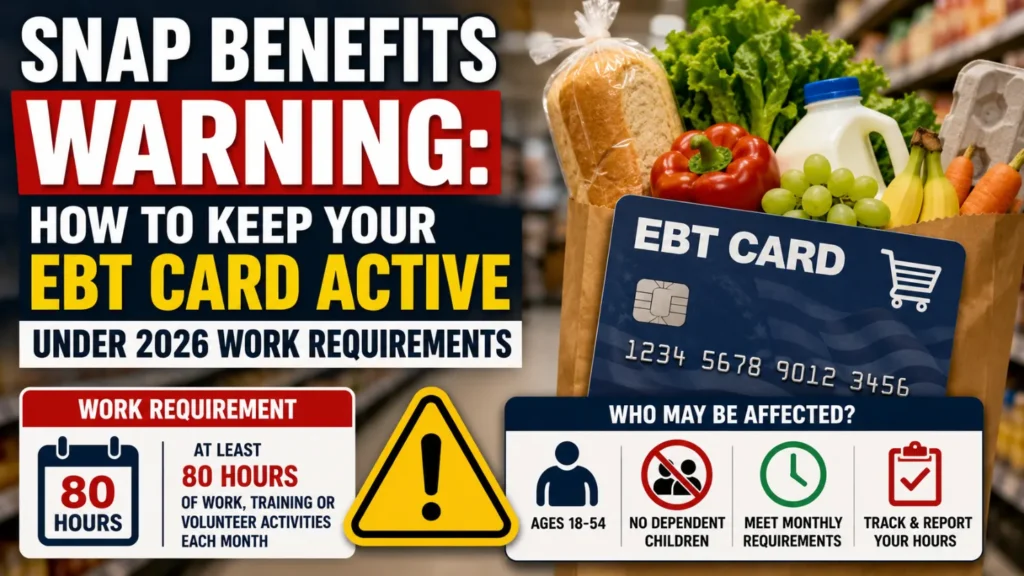
SNAP Benefits Work Requirements: How to Keep Your EBT Card Active in 2026
| Main Rule | Eligible adults may need to work, train or volunteer at least 80 hours each month |
| Who May Be Affected | Certain Able-Bodied Adults Without Dependents (ABAWDs) |
| Key Exceptions | Pregnancy, disabilities, homelessness, veterans and other qualifying situations |
| Main Goal | Keep SNAP benefits active by meeting eligibility requirements |
What Are the SNAP Work Requirements?
Federal SNAP rules require some adults to meet monthly work-related activities in order to continue receiving food assistance.
For many ABAWD recipients, this generally means completing at least 80 hours per month through one or more approved activities, including:
- Paid employment.
- Self-employment.
- Job training.
- Approved education programs.
- Community service or volunteer work accepted by the state.
States administer SNAP programs, so approved activities and reporting procedures may vary.
Who Must Meet the Rule?
Current federal law generally applies the ABAWD work requirement to certain adults between ages 18 and 54 who do not have dependent children living in their household.
To remain eligible beyond the limited time period allowed under federal law, affected individuals usually must satisfy the monthly work requirement unless they qualify for an exemption.
Because eligibility rules can differ by state, recipients should review guidance from their local SNAP office.
Who May Qualify for an Exemption?
Not every SNAP recipient must meet the monthly work requirement.
Common exemptions may include individuals who are:
- Pregnant.
- Physically or mentally unable to work.
- Receiving disability-related assistance.
- Veterans who qualify under federal SNAP provisions.
- Experiencing homelessness under qualifying federal definitions.
- Former foster youth who meet eligibility requirements.
- Caring for a child or another qualifying household member.
Additional exemptions may apply depending on individual circumstances and state administration.
Read Also-Attention Seniors: The New $184,500 Social Security Income Rule Explained
What Happens If You Don’t Meet the Requirement?
Recipients who are subject to the ABAWD rule and fail to meet work requirements or do not qualify for an exemption may lose eligibility after the federally allowed time limit.
Missing paperwork or failing to report completed work hours can also delay or interrupt benefits.
If your circumstances change, contact your local SNAP agency as soon as possible to update your case.
How to Keep Your EBT Benefits Active
To reduce the risk of losing benefits:
- Track your monthly work or training hours.
- Submit requested documents before deadlines.
- Report changes in employment or household status promptly.
- Keep copies of paperwork sent to your SNAP office.
- Respond quickly if your state requests additional verification.
Staying organized can help prevent avoidable benefit interruptions.
Where to Find Food Assistance if Benefits Stop
Families facing temporary food insecurity may still have access to emergency food resources.
Possible sources of assistance include:
- Local food banks.
- Community food pantries.
- Faith-based food assistance programs.
- School meal programs for eligible children.
- State and county emergency assistance organizations.
These programs can help bridge short-term gaps while SNAP eligibility issues are being resolved.
Read Also- These 5 Retirement Rule Changes Could Affect Millions of Americans in 2026
FAQs
How many hours must ABAWD recipients work each month?
Many affected adults must complete at least 80 hours per month through approved work, training or volunteer activities.
Does every SNAP recipient have to meet work requirements?
No. The federal work requirement applies only to certain ABAWD recipients. Many households are exempt.
Can pregnancy qualify for an exemption?
Yes. Pregnancy is among the circumstances that may exempt an individual from the ABAWD work requirement.
What if I become unable to work?
Recipients who experience a physical or mental limitation should notify their local SNAP office, as they may qualify for an exemption.
Who should I contact if I have questions about my benefits?
Your state’s SNAP agency can explain eligibility rules, reporting requirements and available exemptions based on your individual situation.
The 2026 SNAP work requirements are designed to encourage employment while continuing to support eligible households facing food insecurity. For recipients affected by the ABAWD rules, understanding the 80-hour monthly requirement, keeping accurate records and reporting changes on time can help prevent unnecessary benefit interruptions. If you believe you qualify for an exemption, contact your local SNAP office promptly so your case can be reviewed before your benefits are affected.

Diana Luci is a U.S.-based Latest and financial news writer covering Social Security, IRS tax updates, SNAP benefits, Medicare, and government assistance programs. She focuses on simplifying complex financial and policy topics into clear, easy-to-understand information for everyday readers.