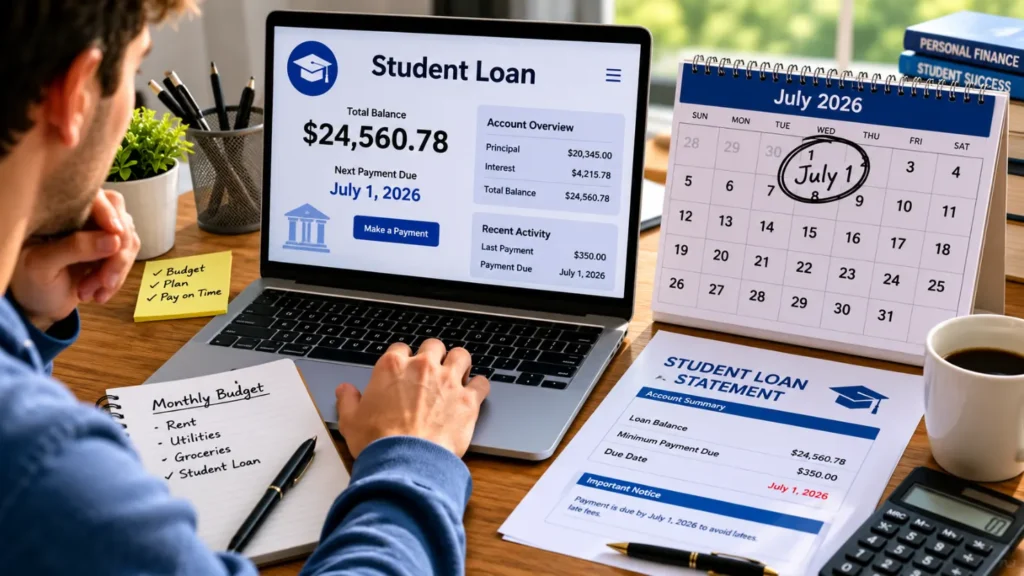
A massive shifting of the financial landscape is about to impact millions of Americans holding higher education debt. Starting July 1, 2026, the federal student loan system will undergo its most significant structural transformation in decades. With more than 43 million borrowers collectively owing a staggering $1.6 trillion in federal debt, these upcoming regulatory deadlines are forcing families to quickly re-evaluate their repayment strategies.
The sweeping modifications stem from the passage of the One Big Beautiful Bill Act in July 2025. While the transition may not feel quite as jarring as the initial post-pandemic resumption of payments, multiple critical updates regarding loan limits, consolidation requirements, and plan terminations mean that acting immediately is essential to protect your financial health.
Read Also-Referendum Explained: The Definition, Meaning, and Historic Examples
The Immediate Fall of the SAVE Plan
The biggest headache for a massive portion of borrowers is the sudden termination of the Saving on a Valuable Education (SAVE) plan. More than 7 million individuals had enrolled in the popular program with the expectation of securing eventual loan forgiveness. Following a successful legal challenge, however, the SAVE plan has been completely dismantled.
Borrowers who were actively enrolled in SAVE now find themselves on a strict 90-day countdown clock to manually select a new repayment structure. Failing to choose a replacement within this three-month window carries heavy consequences. Those who miss the deadline will be automatically transitioned into a default federal plan by the government, stripping away their ability to choose a customized option that aligns with their actual monthly income and repayment capacity.
Narrowing Repayment Paths and a Looming Parent PLUS Deadline
The options for managing federal debt are shrinking significantly. The government is launching a multi-year phase-out of both the Income-Contingent Repayment (ICR) and Pay As You Earn (PAYE) frameworks, which will completely disappear by July 1, 2028. Moving forward, borrowers will essentially navigate between two primary paths:
- The Standard Repayment Plan: A traditional model allowing individuals to pay off their debt over a timeline of 10 to 25 years, scales directly based on the total amount borrowed.
- The Repayment Assistance Plan (RAP): A new income-driven alternative that calculates monthly obligations at 1% to 10% of a borrower’s adjusted gross income (AGI). While it features a low minimum payment floor of $10 per month, there is no maximum monthly ceiling, and total loan forgiveness is pushed out to a 30-year horizon.
Simultaneously, families utilizing Parent Direct PLUS loans are facing an immediate June 30 deadline. If a family is aiming to qualify for Public Service Loan Forgiveness (PSLF), those parent loans must be legally restructured into a Direct Consolidation Loan before July 1, 2026. Borrowers must also successfully enroll in an income-driven repayment plan before that exact same cut-off date.
Missing this window means income-driven options vanish completely for these accounts, leaving standard repayment plans as the only legal route forward. Existing Parent PLUS borrowers who are entirely current on their payments have a bit more breathing room, as they can technically remain on their current tracks until loan servicers migrate them over by July 1, 2028.
Read Also-SSI Check for July 2026: Official Delivery Dates and Full Summer Payment Schedule
Strict New Borrowing Caps on the Horizon
For incoming students and parents looking to finance education moving forward, the financial safety net is tightening. Federal loans initiated on or after July 1, 2026, will be subject to rigid statutory caps designed to limit total federal exposure:
- New Parent PLUS Loans: Capped at a maximum of $20,000 per year per student, with a strict lifetime ceiling of $65,000 per student.
- Graduate Student Loans: Restricted to an annual borrowing limit of $20,500, accumulating to a maximum lifetime total of $100,000.
- Professional Student Loans: Limited to $50,000 annually, with a hard lifetime cap set at $200,000.
Notably, existing Parent PLUS accounts funded before the July 1 cut-off date are exempt from these new limits and can continue operating under original terms for up to three additional years, or until the overarching program officially sunsets.
However, looking slightly further down the road, borrowers should brace for the elimination of Unemployment and Economic Hardship Deferment programs for all new loans starting July 1, 2027, alongside strict new nine-month limits on emergency forbearance allowances.
Despite these massive structural changes, core foundational elements of the system remain intact. Students must still fill out the standard FAFSA forms to access any form of federal aid, and private lenders will continue to offer secondary loans to fill in any remaining funding gaps.
For the most accurate, up-to-date look at your specific accounts, logging into the official studentaid.gov portal remains the single best way to review your active balances and execute your next steps safely.
Read Also- Bill Cassidy Social Security Plan: Senator Pushes New Fix Before 2032 Deadline
Frequently Asked Questions (FAQs)
Q1: What happens if I do not choose a replacement for my canceled SAVE plan?
If you do not select a new repayment option within the designated 90-day window, you will be automatically placed into a generic federal repayment plan without the ability to customize your terms.
Q2: What is the deadline to consolidate Parent PLUS loans for public service forgiveness?
You must completely restructure your Parent Direct PLUS loans into a Direct Consolidation Loan and enroll in an income-driven plan before July 1, 2026.
Q3: What are the new lifetime borrowing limits for graduate students?
Federal graduate student loans initiated on or after July 1, 2026, will face a strict annual limit of $20,500 and a lifetime maximum cap of $100,000.
Q4: How does the new Repayment Assistance Plan (RAP) calculate monthly payments?
The RAP sets monthly payments based on a range of 1% to 10% of your adjusted gross income, with a minimum payment requirement of $10 per month and no upper limit on maximum monthly payments.
Q5: Are the rules changing for private student loans under this overhaul?
No, private education loans are not directly affected by these federal changes and remain fully available through commercial lenders to cover educational shortfalls

Diana Luci is a U.S.-based financial news writer covering Social Security, IRS tax updates, SNAP benefits, Medicare, and government assistance programs. She focuses on simplifying complex financial and policy topics into clear, easy-to-understand information for everyday readers.