The future of Social Security has become one of Washington’s biggest financial challenges as the Social Security Trust Fund Deadline moves closer. Updated projections show that lawmakers have less time than previously expected to strengthen the program before automatic benefit reductions could become a possibility.
Although current retirees continue receiving their full monthly payments, Congress is now debating several difficult options to address the program’s long-term funding gap. The decisions made over the next few years could influence retirement benefits for millions of Americans.
Read Also- Golden State Stimulus Update: New California Payments Begin This Week
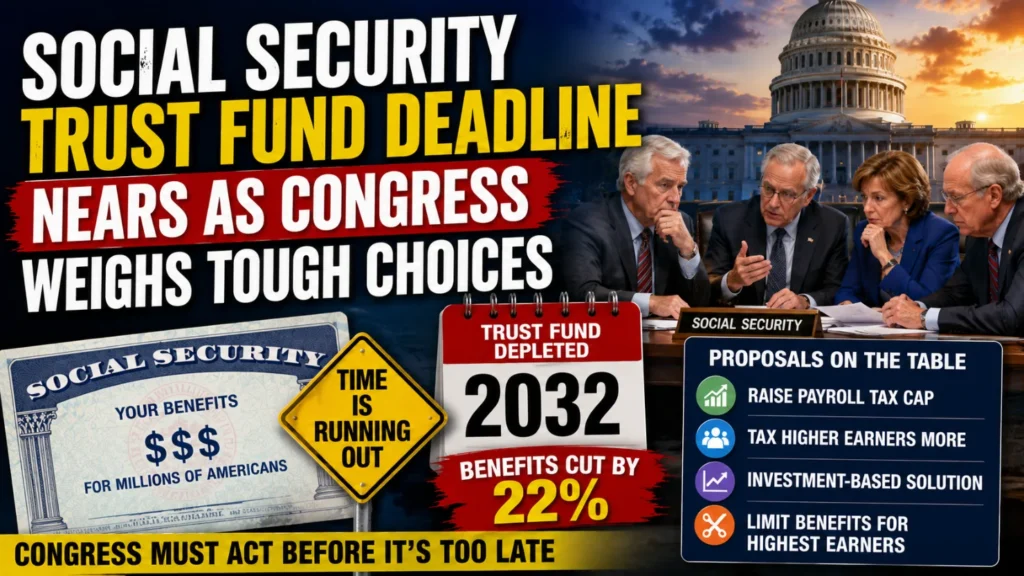
Social Security Trust Fund Deadline Nears as Congress Weighs Tough Choices
| Projected Trust Fund Depletion | 2032 |
| Possible Benefit Reduction | About 22% if no action is taken |
| Current Benefit Changes | None |
| Main Issue | Long-term funding shortfall |
Social Security Trust Fund Deadline Is Drawing Closer
The latest projections indicate that the Social Security Trust Fund Deadline could arrive in 2032, one year earlier than previous estimates.
The retirement trust fund has helped bridge the gap between payroll tax revenue and benefit payments for years. However, as more Americans retire and people live longer, annual benefit payments have continued to exceed incoming payroll tax revenue.
If Congress does not approve reforms before the projected deadline, Social Security would continue operating using payroll tax collections alone. Current estimates suggest those revenues would cover about 78% of scheduled benefits, resulting in an automatic reduction of approximately 22%.
Why Is the Deadline Moving Closer?
Several long-term trends are putting pressure on the program.
These include:
- An aging population.
- More retirees collecting benefits.
- Longer life expectancy.
- Slower growth in payroll tax revenue compared with benefit payments.
The trust fund has been used to cover the annual funding gap, but those reserves are projected to be exhausted if no legislative changes are made.
What Solutions Are Being Discussed?
Lawmakers from both political parties have introduced different proposals to improve Social Security’s long-term finances.
Raising the Payroll Tax Cap
One proposal would require higher-income workers to pay Social Security payroll taxes on more of their earnings.
Currently, wages above the annual taxable earnings limit are not subject to Social Security payroll taxes. Supporters argue that expanding or removing the cap would generate significant additional revenue without changing benefits for most workers.
Read Also- Your Social Security Check Dropped After Retirement? Here’s What Could Be Causing It
Expanding Taxes on High Earners
Another proposal would apply Social Security payroll taxes to earnings above $400,000 while also expanding taxation on certain investment income.
Supporters believe this approach could strengthen the program without reducing benefits for current retirees.
Investment-Based Funding
A bipartisan proposal has suggested creating a federally managed investment fund financed through government borrowing.
The idea is that long-term investment returns could help strengthen Social Security finances. However, retirement policy researchers have cautioned that market performance is unpredictable, making this strategy less certain than traditional funding methods.
Limiting Benefits for the Highest Earners
Some policy experts have also proposed limiting Social Security benefits only for retirees receiving the largest monthly payments.
Under this approach, most beneficiaries would continue receiving their current benefits while reductions would apply only to the highest-income recipients.
What Does This Mean for Current Retirees?
For now, nothing changes.
Monthly Social Security benefits continue under current law, and no legislation has been passed to reduce payments.
The projected funding challenge represents a future issue rather than an immediate change to retirement benefits. Congress still has time to approve reforms before the projected trust fund deadline arrives.
Why Acting Early Could Matter
Many economists believe addressing the funding gap sooner would provide lawmakers with more flexibility.
Early reforms could spread changes over a longer period, reducing the need for larger adjustments later. Waiting until the projected deadline could limit available options and increase pressure on future policymakers.
For workers still years away from retirement, the discussion highlights the importance of building additional retirement savings alongside Social Security income.
Read Also- Social Security Cut Headlines Explained: What the 2026 Trustees’ Report Really Says
Frequently Asked Questions
What is the Social Security Trust Fund Deadline?
It refers to the projected year when the retirement trust fund could be depleted if Congress does not approve long-term funding reforms.
Will benefits stop after 2032?
No. Payroll taxes would continue funding Social Security, but current projections suggest they would cover about 78% of scheduled benefits without additional reforms.
Are benefits being reduced right now?
No. Current retirees continue receiving full benefits under existing law.
What proposals are lawmakers discussing?
Ideas include raising the payroll tax cap, increasing taxes on higher earners, creating an investment fund and limiting benefits for the highest-income retirees.
Can Congress prevent future benefit reductions?
Yes. Lawmakers have several policy options available and can approve changes before the projected trust fund deadline.
The Social Security Trust Fund Deadline has become one of the most closely watched issues in retirement policy. While current benefits remain unchanged, updated projections show that Congress has a limited window to strengthen the program before long-term funding challenges become more serious. For retirees and future beneficiaries, following official updates and understanding the proposals under discussion will be essential as lawmakers debate the future of Social Security.

Diana Luci is a U.S.-based Latest and financial news writer covering Social Security, IRS tax updates, SNAP benefits, Medicare, and government assistance programs. She focuses on simplifying complex financial and policy topics into clear, easy-to-understand information for everyday readers.