Security experts are warning Americans to stay alert after reports of fake QR codes appearing in public places across the United States.
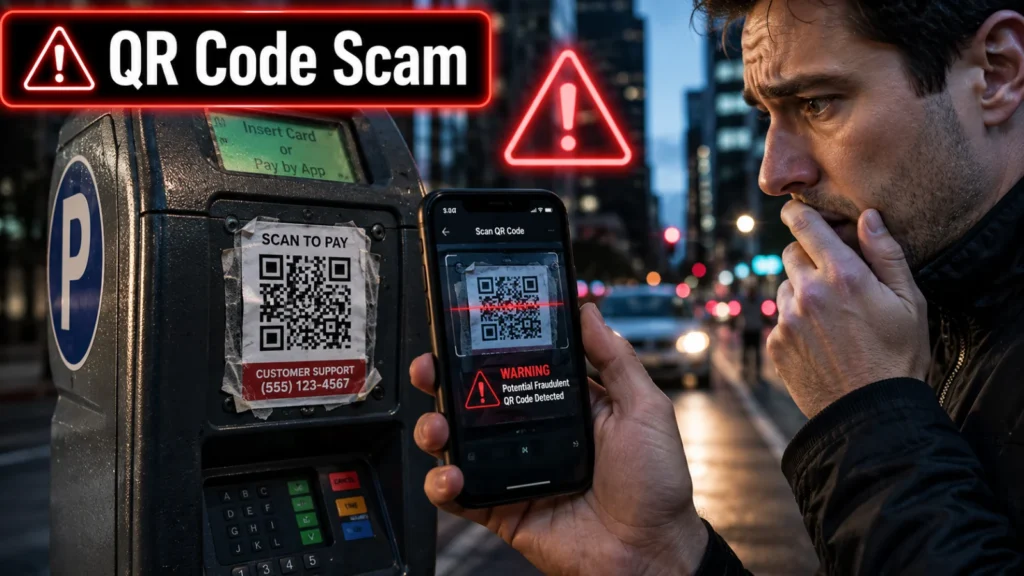
The scam involves criminals placing fraudulent QR code stickers over legitimate payment systems in locations such as parking meters, restaurants, gas stations, and public transportation areas.
Experts say unsuspecting users who scan the fake codes may be redirected to fraudulent payment websites designed to steal personal or banking information.
Why “2026 Is the New 2016” Is Suddenly Trending Across Social Media
How The Scam Works
According to cybersecurity analysts, scammers create fake QR code stickers that closely resemble official payment or information systems.
Victims are often encouraged to:
- pay for parking
- open restaurant menus
- access payment portals
- download fake apps
Once scanned, the code may redirect users to fake websites requesting:
- debit card details
- banking information
- passwords
- mobile payment credentials
Experts warn that some scam pages look almost identical to legitimate websites.
Why Authorities Are Concerned
Digital payment systems and QR codes have become increasingly common across the U.S., especially in major cities and public spaces.
Because many users trust QR codes automatically, cybersecurity professionals say scammers are taking advantage of that behavior.
Experts also warn that fake QR code scams are difficult for many people to recognize quickly, especially when users are in a hurry.
Several fraud prevention specialists have encouraged Americans to inspect QR code stickers carefully before scanning them.
3 Costly 401k Mistakes That Could Derail Your Retirement In 2026
Common Places Where Fake QR Codes May Appear
Security experts say fake QR codes are commonly reported in:
- parking meters
- public charging stations
- restaurant tables
- gas stations
- vending machines
- event venues
Scammers may place stickers directly over official codes to make them appear legitimate.
Warning Signs To Watch For
Experts recommend checking for:
- suspicious stickers placed over existing QR codes
- unusual payment websites
- spelling mistakes
- unexpected login requests
- strange URLs after scanning
Users should also avoid entering sensitive financial information on websites that appear unfamiliar or suspicious.
How Americans Can Protect Themselves
Cybersecurity professionals recommend:
- verifying websites before making payments
- using official business apps when possible
- avoiding rushed payments
- checking QR codes for tampering
- monitoring bank transactions regularly
Consumers who suspect fraud are encouraged to contact their banks immediately and report suspicious activity.
Digital Scams Continue Expanding
As mobile payments and contactless systems continue growing in popularity, experts believe QR-code-related scams may become more common throughout 2026.
Cybersecurity analysts say public awareness remains one of the strongest defenses against evolving online and payment-related fraud schemes.
Conclusion
Americans are being encouraged to remain cautious when scanning QR codes in public places as scammers continue developing new digital fraud methods.
Experts say verifying payment systems and avoiding suspicious links can help users protect their financial information and personal data.
Will 2027 Social Security Cost-Of-Living Adjustment Crack 4%?

Diana Luci is a U.S.-based Latest and financial news writer covering Social Security, IRS tax updates, SNAP benefits, Medicare, and government assistance programs. She focuses on simplifying complex financial and policy topics into clear, easy-to-understand information for everyday readers.