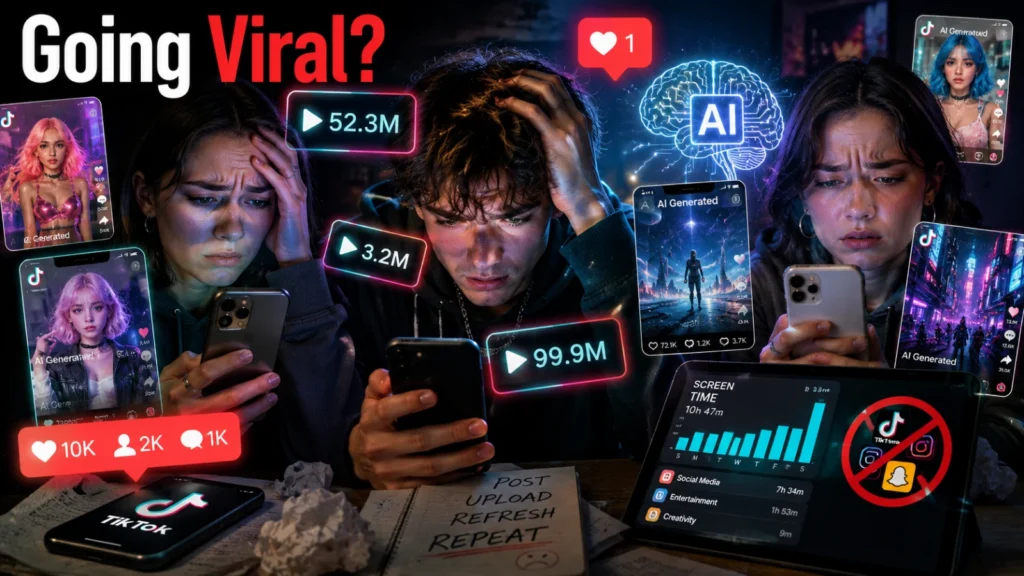
A growing number of Gen Z users across the United States are beginning to push back against “viral culture” as online conversations about social media pressure, AI-generated content, and internet burnout continue gaining attention.
The shift has recently become a major discussion point across fashion, entertainment, and internet culture publications, where analysts say younger users are becoming less interested in chasing online virality and more interested in authenticity and private communities.
Social media users have increasingly criticized what many describe as “forced viral content” and endless algorithm-driven trends appearing across platforms like TikTok, Instagram, and X.
Why Americans Are Covering Front Cameras With Tape Again
Why Gen Z Is Turning Away From Viral Culture
Experts say many younger users are becoming exhausted by constant pressure to:
- go viral
- gain followers
- create trending content
- stay visible online
At the same time, concerns surrounding AI-generated posts and “AI slop” content have become more common across social media discussions.
Some users now say the internet feels:
- less personal
- overly commercialized
- repetitive
- emotionally draining
As a result, many Gen Z users are shifting toward smaller communities, private group chats, and more offline experiences.
The Rise Of “Offline Culture”
Several lifestyle and fashion publications recently reported that younger audiences are becoming more interested in:
- offline events
- long-form content
- smaller creator communities
- intentional social media use
Instead of trying to dominate algorithms, many creators are now focusing on more personal and meaningful content styles.
Experts believe this cultural shift reflects growing frustration with how modern social media platforms reward constant engagement and attention-seeking behavior.
AI Content Is Also Fueling The Backlash
The rapid rise of artificial intelligence tools has added to online frustration among younger internet users.
Many people online have recently criticized:
- AI-generated videos
- fake influencer content
- spam-style posts
- repetitive trend copying
The phrase “AI slop” has become increasingly common in discussions about low-quality viral content flooding social media feeds.
Fans React After Miley Cyrus’ Mother Sparks Marriage Rumors at Hollywood Event
Some Gen Z users say they now prefer content that feels:
- real
- human
- less edited
- emotionally authentic
Why The Trend Matters
Internet culture experts believe the growing backlash against viral culture could influence:
- marketing trends
- influencer culture
- online advertising
- social media platforms
Brands and creators are already experimenting with more “low-pressure” and community-focused content styles instead of aggressively chasing internet virality.
Analysts say this shift may continue growing throughout 2026 as younger audiences spend more time questioning how algorithms shape online behavior.
Conclusion
The growing backlash against “going viral” reflects a major shift in how younger Americans are thinking about internet culture and social media pressure.
As AI-generated content and algorithm-driven trends continue spreading online, many Gen Z users now appear to be searching for more authentic digital experiences instead of constant online attention.
Why “2026 Is the New 2016” Is Suddenly Trending Across Social Media

Diana Luci is a U.S.-based Latest and financial news writer covering Social Security, IRS tax updates, SNAP benefits, Medicare, and government assistance programs. She focuses on simplifying complex financial and policy topics into clear, easy-to-understand information for everyday readers.