Cybersecurity experts are warning Americans about a growing online scam involving fake job offers being sent through email, messaging apps, and social media platforms.
The New Fake Job Offer Scam has recently gained attention after multiple users reported receiving suspicious recruitment messages promising high salaries, remote work opportunities, or quick hiring processes.
Experts say scammers are increasingly targeting people searching for jobs, especially remote workers and younger internet users.
Why “2026 Is the New 2016” Is Suddenly Trending Across Social Media
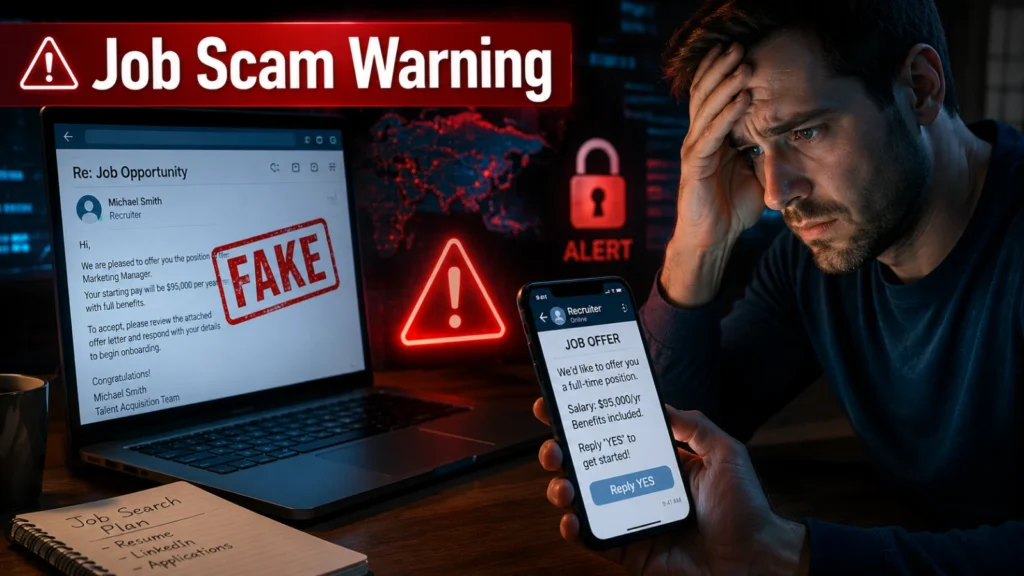
How The New Fake Job Offer Scam Works
According to online safety experts, scammers often pretend to represent well-known companies or recruiters.
Victims may receive:
- fake interview invitations
- remote job offers
- work-from-home opportunities
- high-paying freelance offers
The messages are commonly sent through:
- Telegram
In many cases, scammers pressure users to respond quickly or provide personal information immediately.
Why Experts Are Concerned
Cybersecurity analysts say fake job scams are becoming more sophisticated in 2026.
Some scam messages now include:
- company logos
- fake HR documents
- AI-generated recruiter profiles
- professional-looking websites
Experts warn that victims may unknowingly share:
- resumes
- passport details
- bank information
- Social Security numbers
- identity documents
which can later be used for identity theft or financial fraud.
AARP Flash Warning Over 401k Plans As Americans Risk Losing 35%
Common Warning Signs
Experts recommend watching for several red flags when receiving online job offers.
These include:
- unrealistic salaries
- no proper interview process
- requests for upfront payments
- suspicious email domains
- urgent hiring pressure
- poor grammar or unusual communication
Users are also advised to verify recruiters directly through official company websites.
Social Media Platforms Are Being Targeted
Online scams connected to fake employment opportunities have increased as more companies adopt remote and hybrid work models.
Experts say scammers are taking advantage of:
- economic uncertainty
- remote work demand
- social media communication
- online hiring platforms
Several internet users have also reported fake recruiter accounts contacting them through professional networking websites.
How Americans Can Stay Safe
Cybersecurity professionals recommend:
- avoiding suspicious links
- researching companies carefully
- verifying recruiter identities
- never paying for job applications
- enabling account security protections
Users should also report suspicious messages to the platform where the scam appeared.
Conclusion
As online job scams continue spreading across the United States, experts are encouraging Americans to remain cautious while searching for employment opportunities online.
Security professionals say verifying recruiters and avoiding suspicious offers can help users protect themselves from identity theft and financial fraud.
Social Security Claiming At 62, 65 And 70 Could Cost Retirees Thousands

Diana Luci is a U.S.-based Latest and financial news writer covering Social Security, IRS tax updates, SNAP benefits, Medicare, and government assistance programs. She focuses on simplifying complex financial and policy topics into clear, easy-to-understand information for everyday readers.