Many Americans may soon face higher credit card costs as interest rates and consumer debt concerns continue rising across the United States in 2026.
Financial experts say growing credit card balances, combined with high interest rates, are making it increasingly difficult for some households to manage monthly payments. Recent banking reports also show that more consumers are carrying debt for longer periods instead of paying balances in full each month.
The situation has become a major topic across U.S. finance and business news websites as inflation and everyday living costs continue affecting household budgets.
Americans Are Spending More Money on “Tiny Luxuries” Despite Economic Concerns
Why Credit Card Costs Are Rising
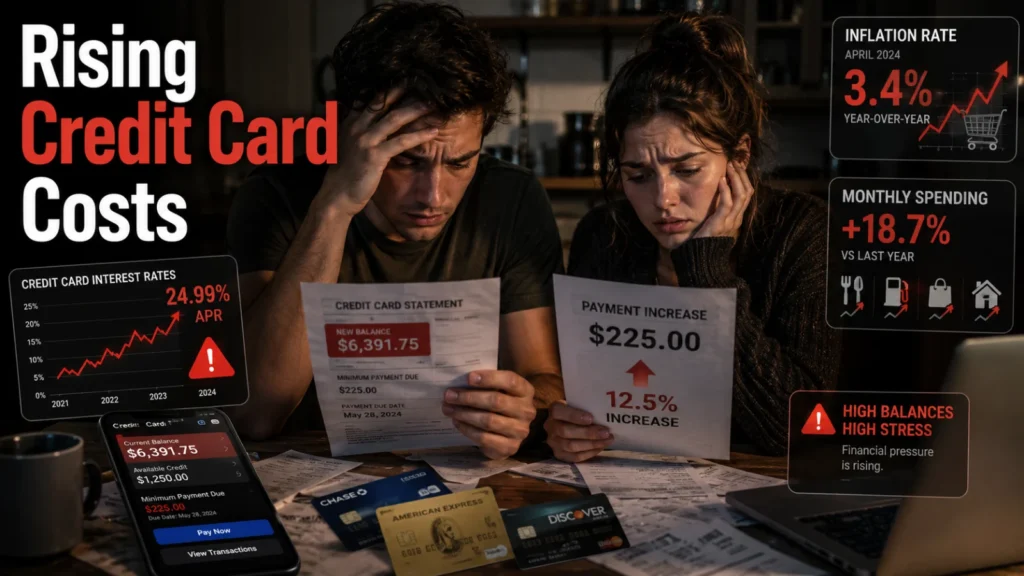
Credit card interest rates in the United States remain near historically high levels after multiple rate increases over recent years.
As a result:
- monthly interest charges are increasing
- minimum payments may rise
- debt can grow faster
- late payment penalties become more expensive
Financial analysts say many consumers are now relying more heavily on credit cards for:
- groceries
- gas
- bills
- travel
- emergency spending
because of ongoing economic pressure.
Americans Are Carrying More Debt
Several recent financial reports show that total U.S. credit card debt remains extremely high in 2026.
Experts say many households are struggling with:
- inflation
- housing costs
- insurance payments
- student loans
- rising everyday expenses
As borrowing continues increasing, some consumers are finding it harder to pay down balances quickly.
Finance experts warn that high-interest debt can grow rapidly when balances are carried month after month.
Why More Young Americans Are Quietly Leaving Instagram for Smaller Online Communities
Why Experts Are Concerned
Financial professionals say younger consumers and middle-income households are among the groups most affected by rising credit card costs.
Some Americans are now paying significantly more in interest even when making regular monthly payments.
Experts also warn that:
- missed payments
- high credit utilization
- repeated borrowing
can negatively affect credit scores over time.
Several banking analysts have encouraged consumers to review spending habits and avoid unnecessary debt whenever possible.
What Americans Can Do To Reduce Costs
Finance experts recommend several ways consumers may reduce financial pressure, including:
- paying more than the minimum balance
- avoiding late payments
- reducing unnecessary spending
- monitoring credit reports
- comparing lower-interest card options
Some experts also suggest creating short-term budgets to better manage rising living expenses.
Financial Stress Continues Across The U.S.
Economic uncertainty and higher borrowing costs remain major concerns for many Americans in 2026.
Online discussions about:
- debt stress
- budgeting
- rising costs
- financial burnout
have become increasingly common across social media and finance communities.
Consumer behavior analysts say many households are becoming more cautious about spending as borrowing grows more expensive.
Why “2026 Is the New 2016” Is Suddenly Trending Across Social Media
Conclusion
As credit card interest rates remain high, millions of Americans may continue facing growing financial pressure throughout 2026.
Experts say understanding borrowing costs and managing debt carefully could become increasingly important as economic uncertainty continues.

Diana Luci is a U.S.-based Latest and financial news writer covering Social Security, IRS tax updates, SNAP benefits, Medicare, and government assistance programs. She focuses on simplifying complex financial and policy topics into clear, easy-to-understand information for everyday readers.